Nadi Shuddhi Pranayama: The Ancient Breathing Practice for Mind-Body Balance
Introduction
In today’s fast-moving world, stress, mental fatigue, and emotional imbalance have become part of everyday life.
While modern wellness trends continue to evolve, ancient yogic practices still offer some of the most effective solutions for restoring calmness and clarity.
One such timeless practice is Nadi Shuddhi Pranayama, also widely known as Anulom Vilom Pranayama.
This powerful breathing technique involves alternate nostril breathing to harmonize the body, mind, and energy system.
Practiced regularly, it may help improve concentration, emotional stability, respiratory health, and overall inner balance.
Whether you are a beginner in yoga or someone looking to deepen your wellness routine, Nadi Shuddhi Pranayama can become a simple yet transformative daily habit.
What is Nadi Shuddhi Pranayama?
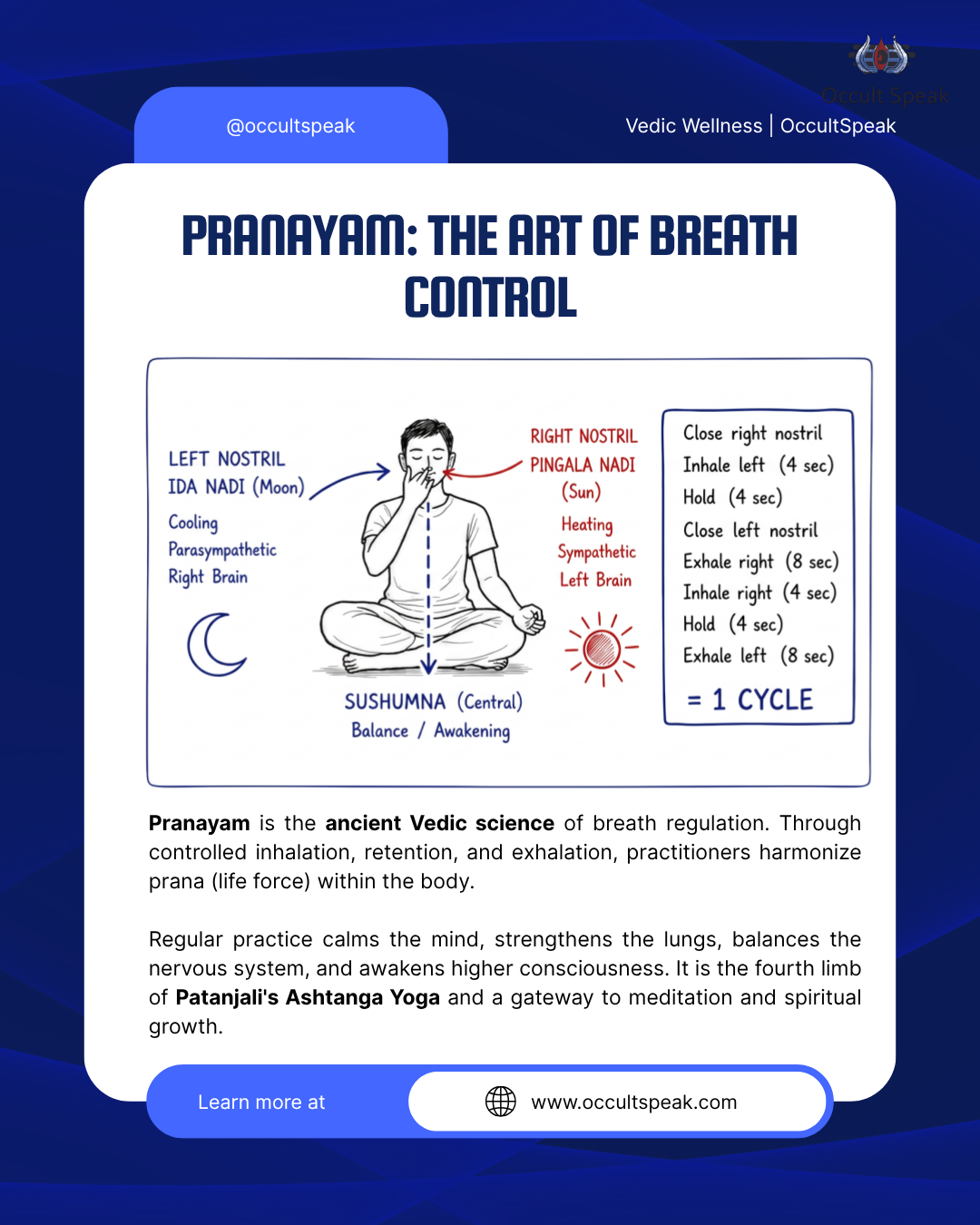
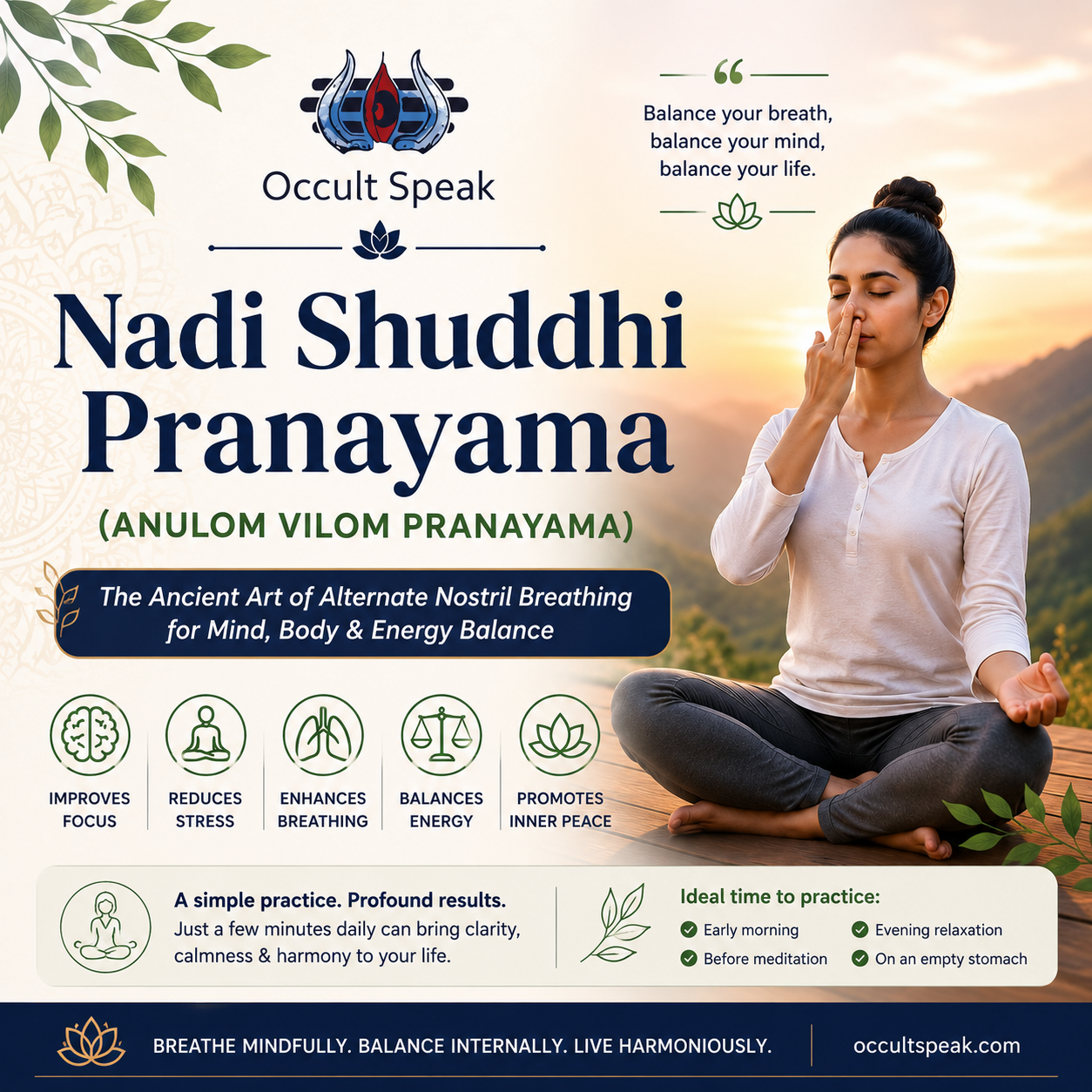
Nadi Shuddhi Pranayama is a yogic breathing exercise designed to cleanse and balance the body’s subtle energy channels, known as nadis. In Sanskrit:
- Nadi means energy channel
- Shuddhi means purification
- Pranayama refers to breath control techniques
This practice is also popularly called Anulom Vilom Pranayama, where breathing alternates between the left and right nostrils in a rhythmic pattern.
According to yogic philosophy, balanced breathing helps regulate both physical and mental energy, creating a state of calm awareness.
Why is Nadi Shuddhi Pranayama Also Called Anulom Vilom?
Although the terms are often used interchangeably, there is a subtle distinction.
Nadi Shuddhi Pranayama A Biohack
Focuses primarily on cleansing and balancing the body’s internal energy pathways. Refers more specifically to the technique of alternate nostril breathing.In modern yoga practice, both names commonly describe the same breathing exercise.
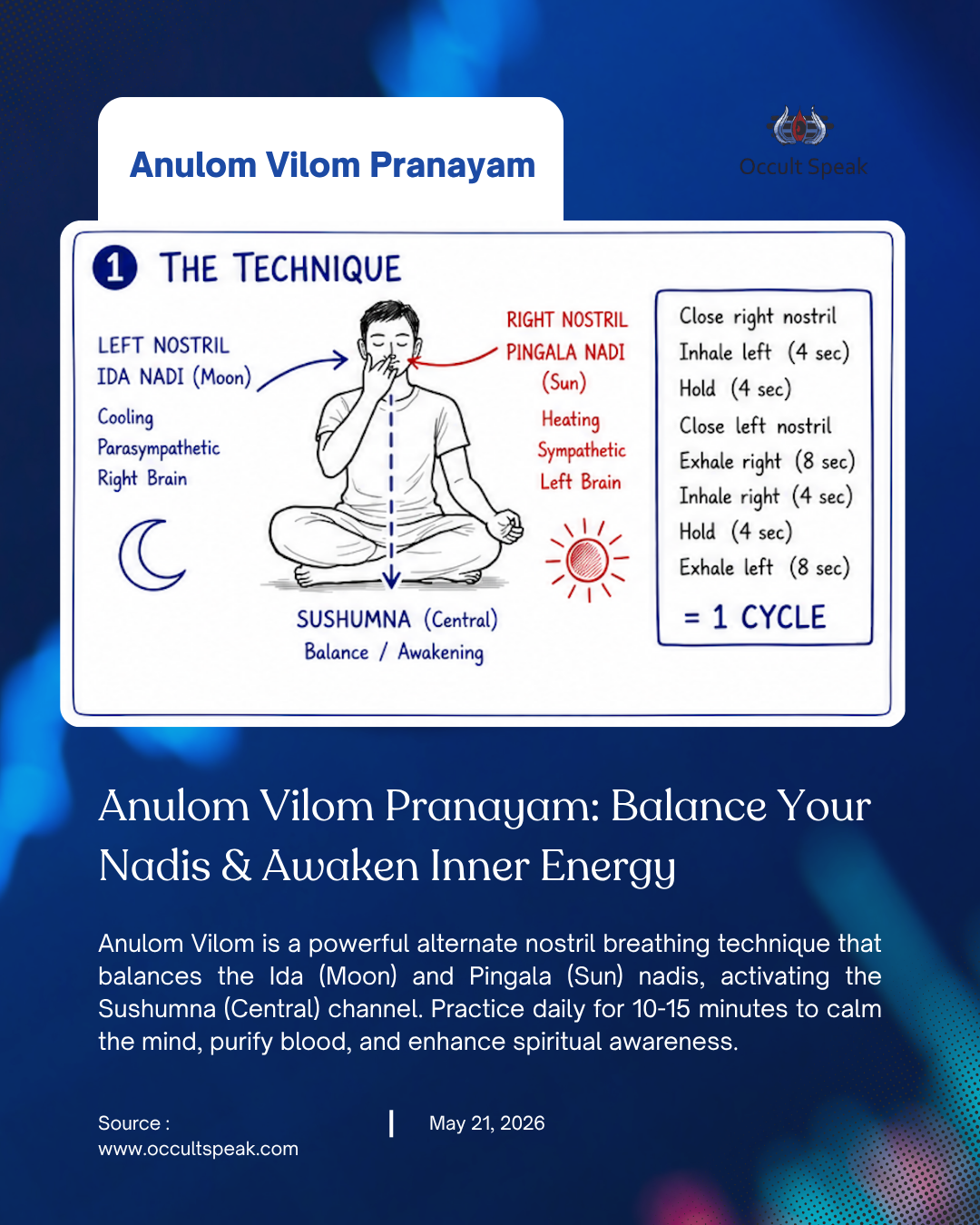
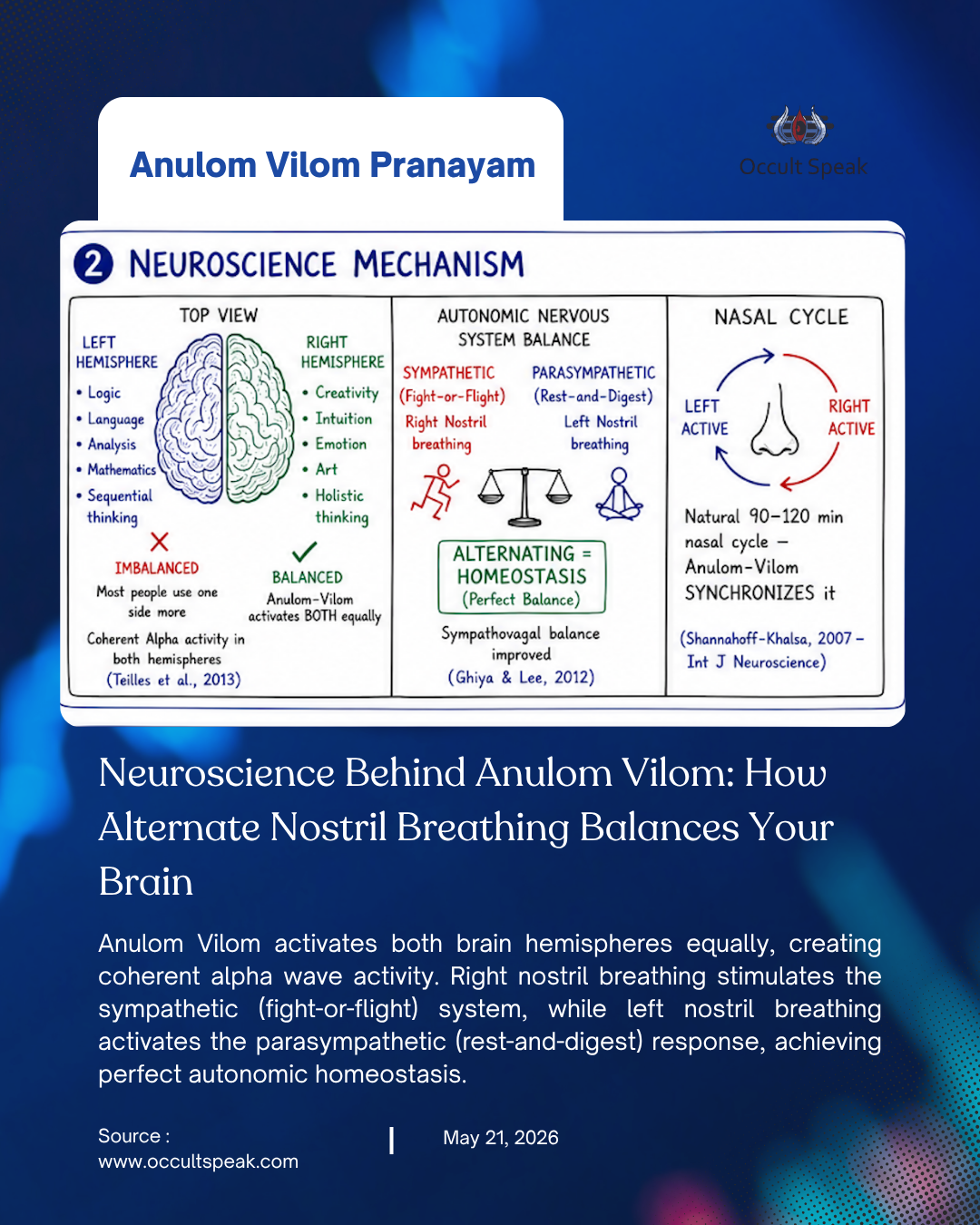
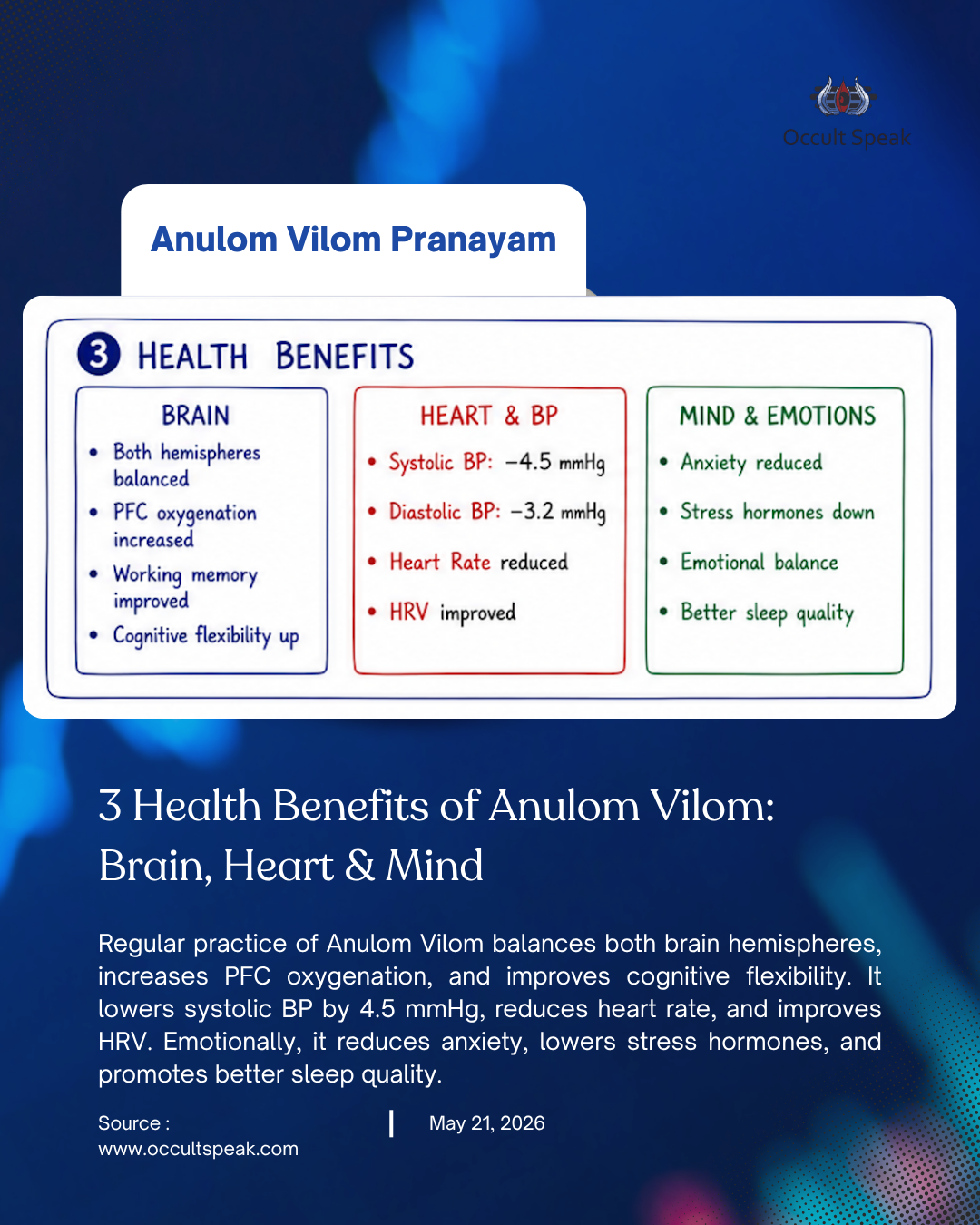
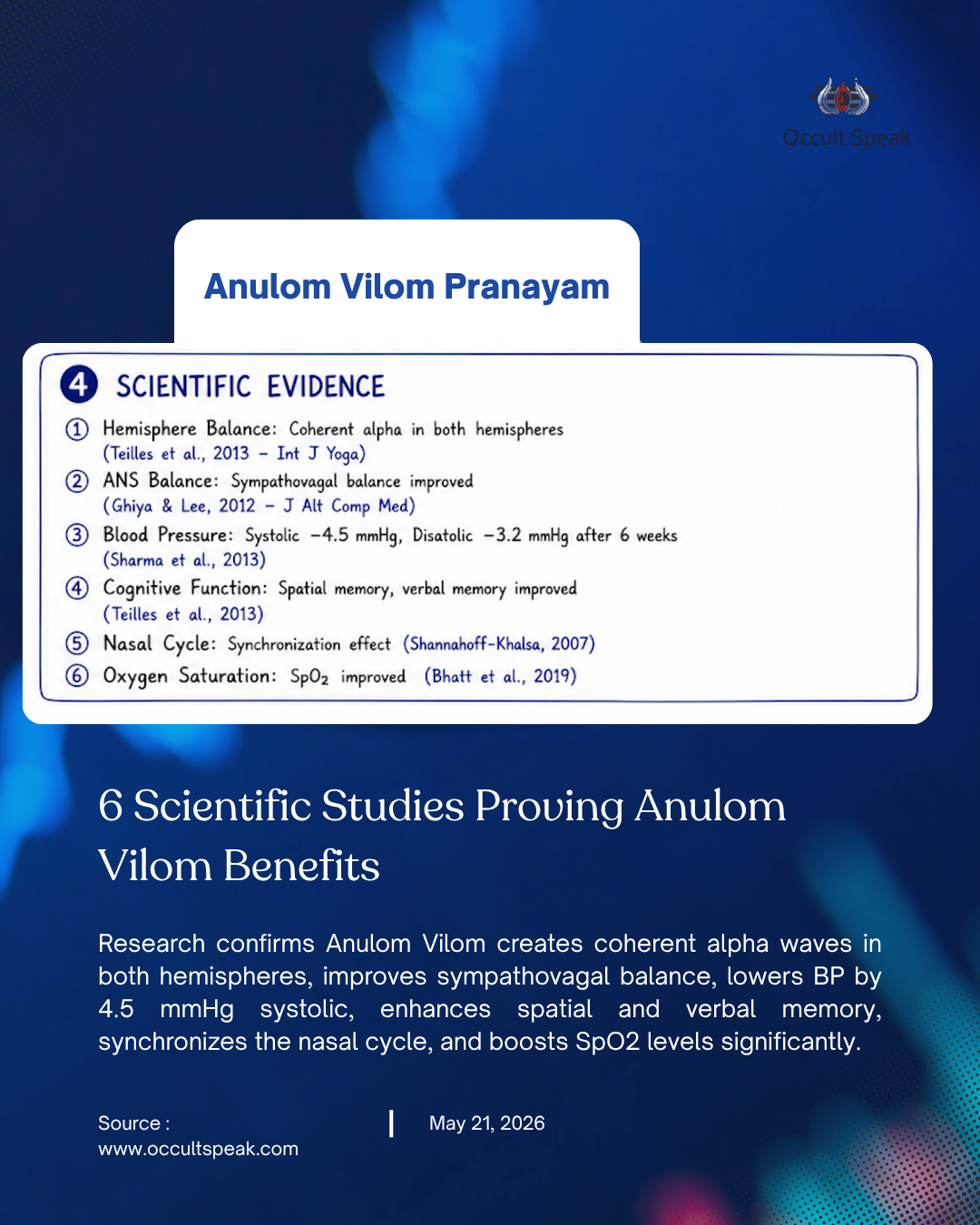
Anulom-Vilom Pranayama balances both the brain hemispheres (Left and Right Hemispheres) and brings the Autonomic Nervous System into balance. Anulom-Vilom Pranayam (Nadi Shodhana/Nadi Shodhana) has been prevailing in the Vedic tradition for thousands of years. Modern neurology has confirmed its effectiveness. This is the simplest and most powerful method of brain ‘bio-hacking’.
How Does Nadi Shuddhi Pranayama Work?
The technique works by controlling airflow through alternate nostrils while maintaining slow, mindful breathing.
Yogic science associates:
- The left nostril with calming and cooling energy
- The right nostril with activating and warming energy
By alternating the breath between both sides, the practice aims to create energetic harmony within the body.
Modern wellness experts also believe controlled breathing may positively influence:
- Stress response
- Heart rate variability
- Mental focus
- Nervous system balance
Step-by-Step Guide to Practice Nadi Shuddhi Pranayama
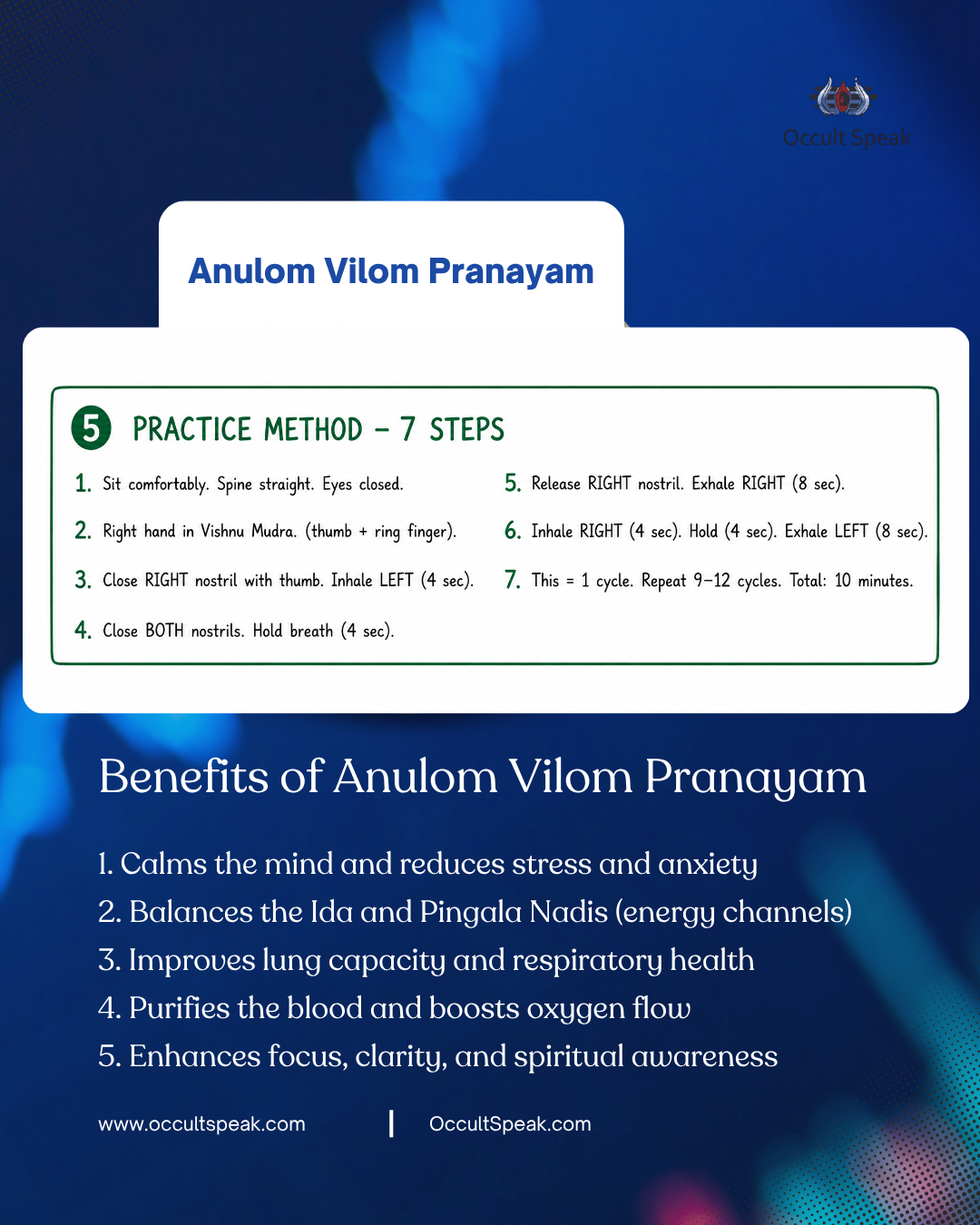
Step 1: Find a Comfortable Position
Sit comfortably with your spine straight. You may sit cross-legged on the floor or on a chair.
Step 2: Relax the Body
Close your eyes and allow your shoulders and facial muscles to relax.
Step 3: Position the Hand
Use your right hand:
- Thumb to close the right nostril
- Ring finger to close the left nostril
Step 4: Begin the Breathing Cycle
- Close the right nostril
- Inhale slowly through the left nostril
- Close both nostrils briefly
- Open the right nostril and exhale
- Inhale through the right nostril
- Close both nostrils
- Exhale through the left nostril
This completes one round.
Step 5: Continue Mindfully
Practice for 5–10 minutes initially and gradually increase the duration as you become comfortable.
Anulom-Vilom Pranayama (Alternate Nostril Breathing), also known as Nadi Shodhana, is the practice of breathing that has been prevailing for thousands of years in the Vedic tradition. In this, breathing and release from the left and right nose hole.
Benefits of Nadi Shuddhi Pranayama
- Its Improves your Mental Clarity
- Slow breathing may help reduce mental clutter and improve concentration.
- Many practitioners report feeling calmer and emotionally lighter after regular practice.
- Mindful breathing can support relaxation and ease nervous tension.
- The practice encourages deeper and more controlled breathing patterns.
- Practicing before bedtime may help quiet the mind and improve sleep quality.
- Nadi Shuddhi encourages mindfulness and a stronger connection between breath and body.
- Best Time to Practice Nadi Shuddhi Pranayama
Early Morning, Evening & Before Meditation
Morning practice is considered ideal because the mind is naturally calm and fresh.This pranayama is often practiced before meditation to prepare the mind for stillness.
It can also be practiced in the evening to release stress accumulated throughout the day.
Common Mistakes to Avoid
Breathing Too Fast Or Forcing the Breath : The breath should remain slow, smooth, and controlled.Avoid excessive pressure or strain while inhaling or exhaling.
Poor Posture : A straight spine supports better breathing and energy flow
Practicing in a Distracting Environment : Always Choose a calm and quiet space for the best experience.
Modern neuroscience (Neuroscience) has confirmed its effectiveness. It balances both hemispheres of the brain (Left and Right Hemispheres) and brings the Autonomic Nervous System into balance. This is the simplest and most powerful method of brain ‘bio-hacking’.
Who Can Practice Nadi Shuddhi Pranayama?
This breathing technique is generally suitable for:
- Beginners
- Yoga practitioners
- Meditation enthusiasts
- Working professionals dealing with stress
- Students seeking better concentration
However, individuals with severe respiratory or medical conditions should consult a healthcare professional before beginning any breathwork practice.
Tips for Better Results
- Practice Consistently & Keep Breath Gentle
- Even 10 minutes daily can create noticeable changes over time.
- Natural breathing creates better relaxation than forced breathing.
- Combine with Meditation & Patient
- Pairing pranayama with meditation may deepen the calming effects.The benefits of yogic breathing build gradually through regular practice.
Conclusion
Nadi Shuddhi Pranayama, also known as Anulom Vilom Pranayama, is more than just a breathing exercise. It is a simple yet powerful method for creating balance between body and mind.
By practicing alternate nostril breathing consistently, you may experience greater calmness, mental clarity, emotional stability, and inner awareness.
In a world filled with constant stimulation, this ancient yogic technique offers a natural way to reconnect with stillness and restore harmony from within.
Love & Light,
Nirav Hiingu