Why a Good Palmist Always Reads Both Hands
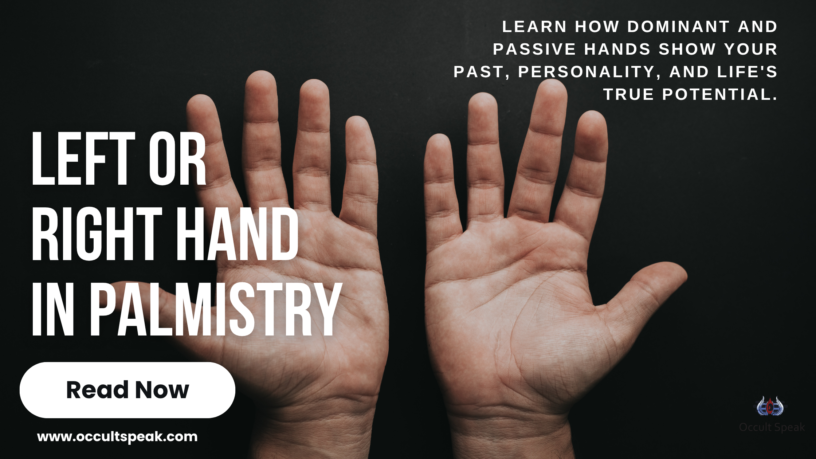
Left or Right Hand : A skilled palmist never reads just one hand. Reading both the left and right hand together is the foundation of accurate palm reading — because each hand tells a different part of your story. Together, they reveal the kind of person you are today, where you began in life, and how your character has evolved through the years.
Understanding the Dominant and Passive Hand : Left or Right Hand in Palmistry
Which Hand Is Your Dominant Hand?
In palmistry, the two hands carry distinct roles based on handedness:
- In a right-handed person, the right hand is the dominant (active) hand and the left hand is the passive hand.
- In a left-handed person, this is reversed — the left hand becomes dominant and the right becomes passive.
This simple distinction is the key to unlocking a deeper reading.
Left Hand or Right Hand in Palmistry — What Both Hands Truly Reveal About You
What Does the Passive Hand Reveal?
The passive hand shows what you were given at birth — your natural tendencies, inherent potential, and the raw material of your personality. It is the hand of origin and inheritance.
Palmists who look for deep-seated family influences will almost always find them on the passive hand. It holds the imprint of your upbringing, your lineage, and the early conditions that shaped who you are.
What Does the Dominant Left or Right Hand Reveal?
The dominant hand shows what you are doing with what you were given. It reflects the choices you have made, the experiences you have lived through, and the personality you actively present to the world.
The lines on your dominant hand evolve over time — they respond to your actions, decisions, and life events in a way the passive hand does not.
Left or Right Hand in Palmistry — What Both Hands Truly Reveal About You
Two Schools of Thought — How Palmists Interpret Both Left or Right Hand
Not all palmists interpret the hands in exactly the same way. There are two widely respected approaches:
The Life Journey Approach
In this reading style:
- The passive hand = your starting point in life — the abilities and traits you inherited.
- The dominant hand = your life in motion — what you have made of those gifts.
This method helps reveal whether you are fully utilising your natural potential or leaving inherent talents unrealised.
Left or Right Hand in Palmistry — What Both Hands Truly Reveal About You
The Inner vs. Outer Personality Approach ( Left or Right Hand in Palmistry )
Some palmists prefer a psychological lens:
- The passive hand = your secret self — who you truly are deep within.
- The dominant hand = the external mask — the personality you project to the world.
This approach is particularly revealing when the two hands show strong differences, pointing to a significant gap between how you feel inside and how others perceive you.
What Comparing Both Hands Can Tell You
A careful side-by-side comparison of your left and right hands is one of the most powerful tools in palmistry. It can reveal:
- Whether you are living up to your natural abilities or wasting them.
- Whether you are overcompensating — for example, presenting yourself as confident and outgoing when deep inside you are naturally shy.
- Whether the self-doubt you feel is reflected in your hands, or whether your hands suggest you are far more capable than you believe yourself to be.
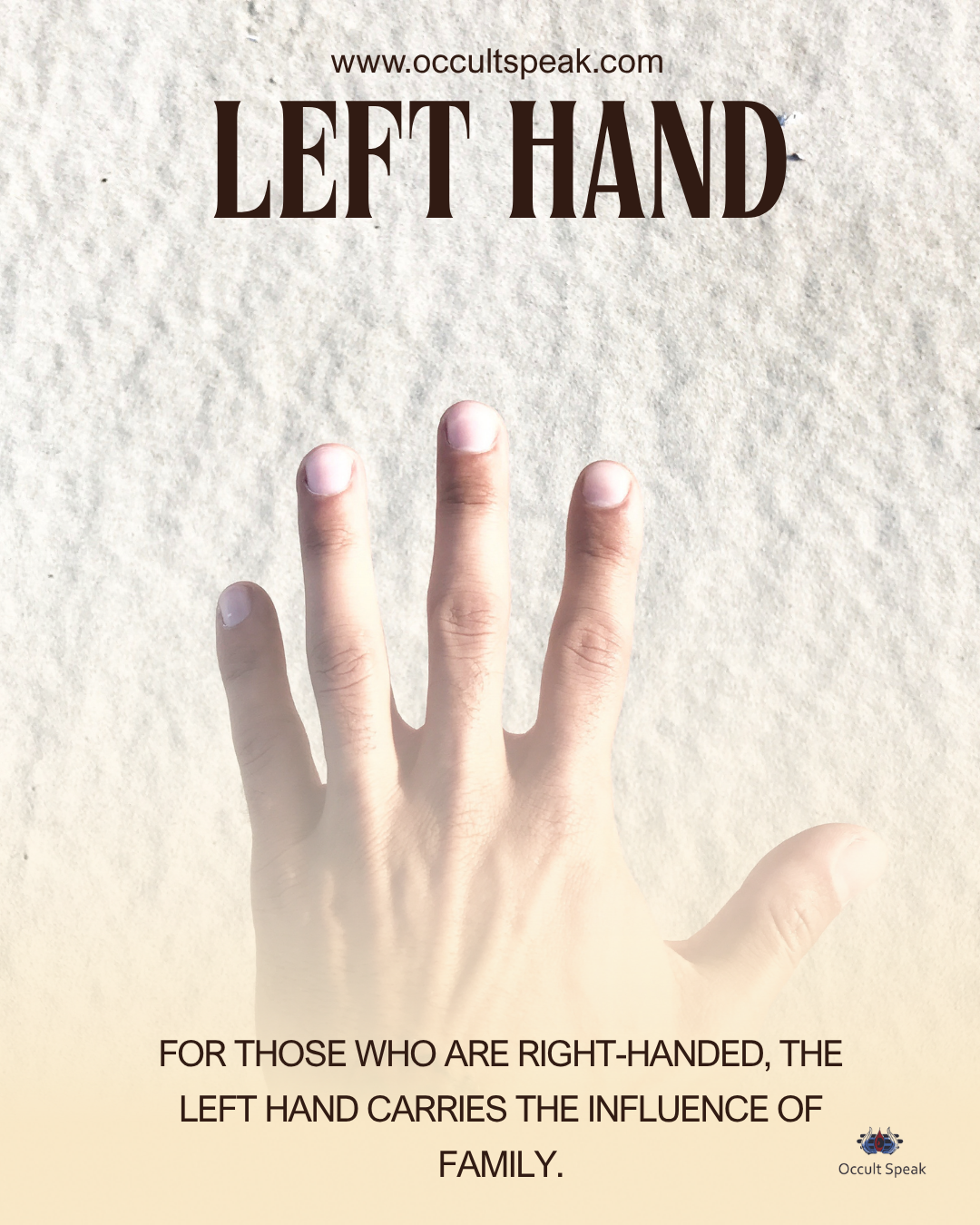
This comparison brings a rare kind of honesty — it holds up a mirror not just to your outer life, but to the truth of who you are becoming.
Left of Right Hand in palmistry
Reading the Left Hand — What It Shows for Right-Handed People
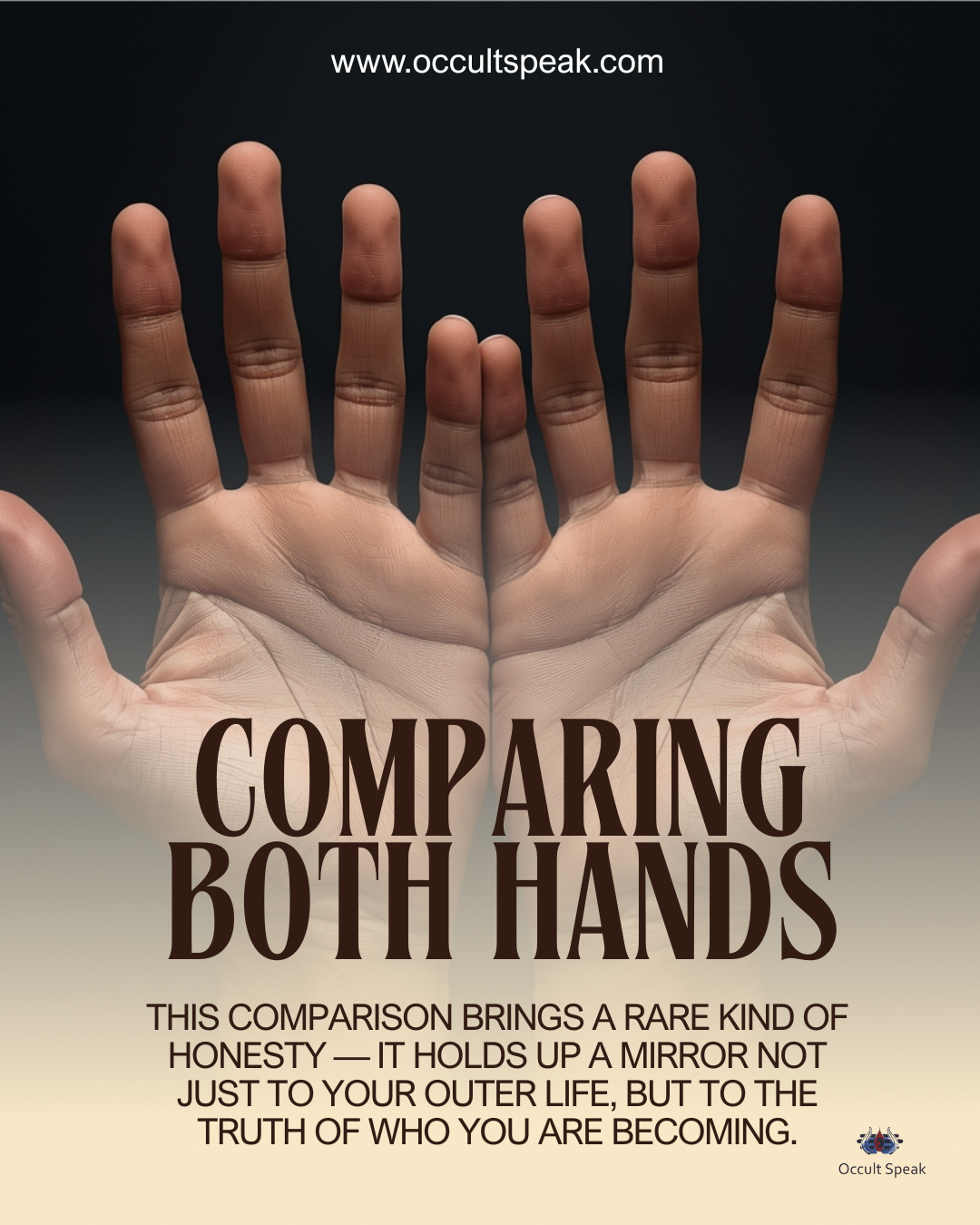
For those who are right-handed, the left hand carries the influence of family.
It is the hand of inheritance — emotional, physical, and karmic. Some experienced palmists go further, claiming they can find traces of a person’s parents’ health conditions and constitutions on this hand. The left hand, in this sense, is not just personal — it is ancestral.
Reading the Right Hand — What It Shows for Right-Handed People
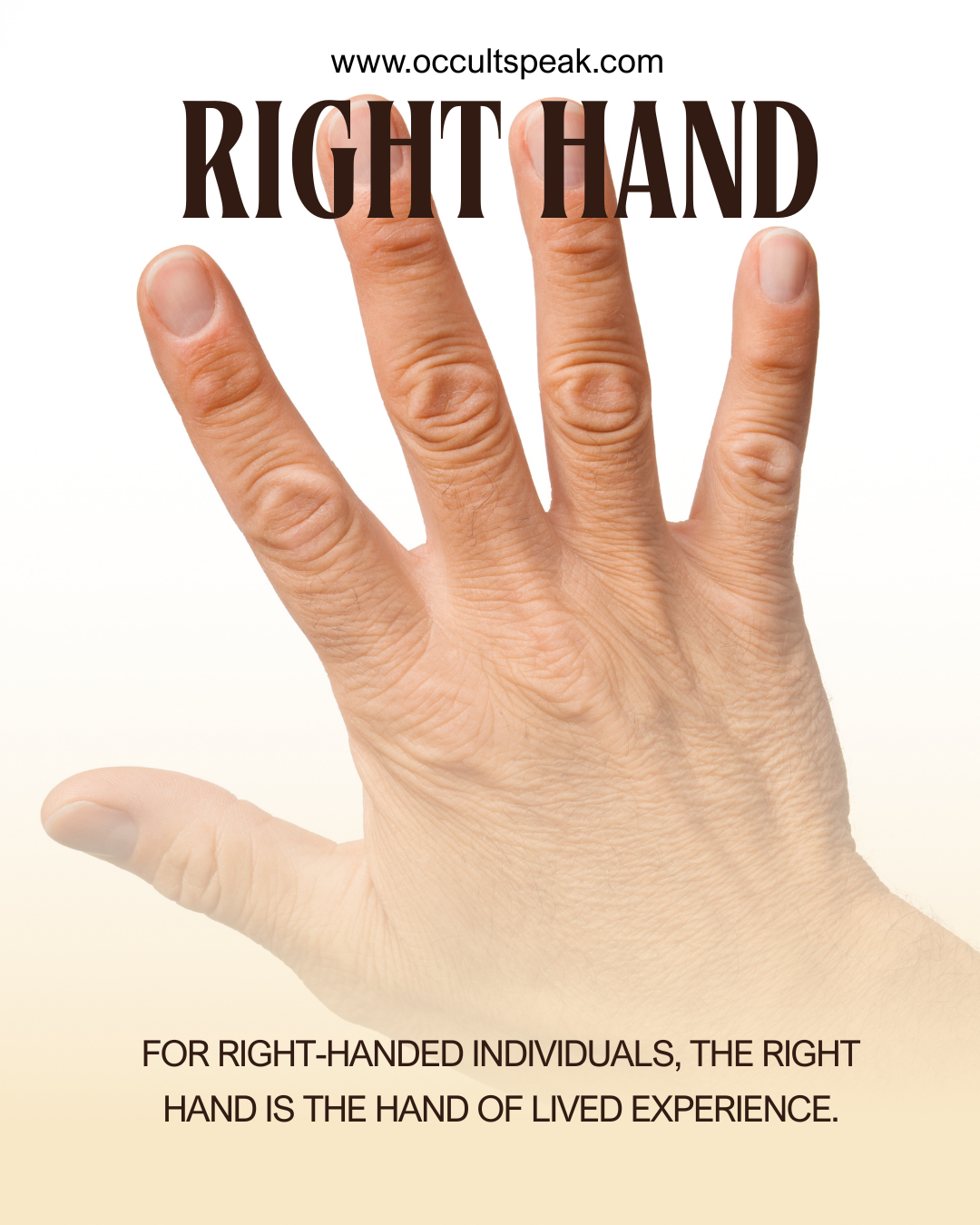
For right-handed individuals, the right hand is the hand of lived experience.
It is far more likely to reflect:
- Major life events such as a serious illness.
- Emotional upheavals such as the traumatic end of a relationship.
- The general direction and quality of the life you are building.
If the left hand is the seed, the right hand is the tree — shaped by weather, season, and the conditions of your actual life.
Final Thought — Both Hands Together Tell the Whole Story
Neither hand alone is sufficient. The real art of palmistry lies in reading the conversation between the two hands — understanding the tension, the alignment, or the contrast between what you were born with and what you are making of it.
Next time you look at your palms, look at both — and notice where they agree, and where they diverge. That gap, or that harmony, is where your most honest self-portrait lives.
Explore more at OccultSpeak.com — your guide to Vedic and occult wisdom.
Regards,
Nirav Hingu
Vedic Palmist

1 Pingback