


What is Forged Signature ?
A forged signature means someone copies or fakes another person’s signature without their permission. This is usually done to trick others, often for financial gain or to approve something illegally.
For example, a person might sign someone else’s name on a cheque or document to make it look genuine.
Forging a signature is considered a serious crime in many countries because it involves fraud and dishonesty. It can lead to legal trouble, including fines or imprisonment.
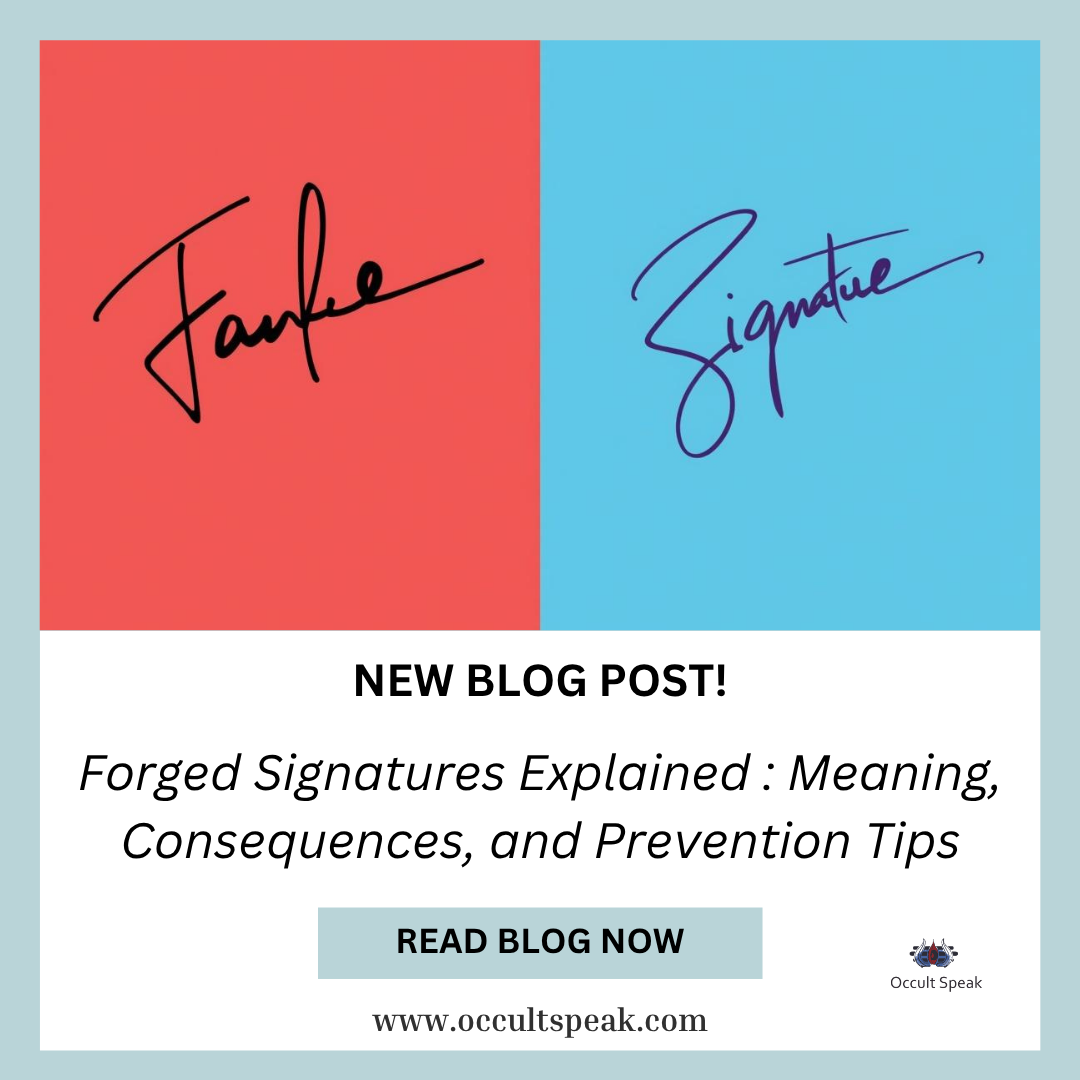
Forged Signatures Explained : Meaning, Consequences, and Prevention Tips
How to identify fake or forged signatures ?
A genuine signature is defined as a personal mark created by a specific person. It typically signifies their agreement to certain terms or serves as a symbolic representation of a formal arrangement.
With this definition as a foundation, we can explore various types of “signatures” that lack authenticity.
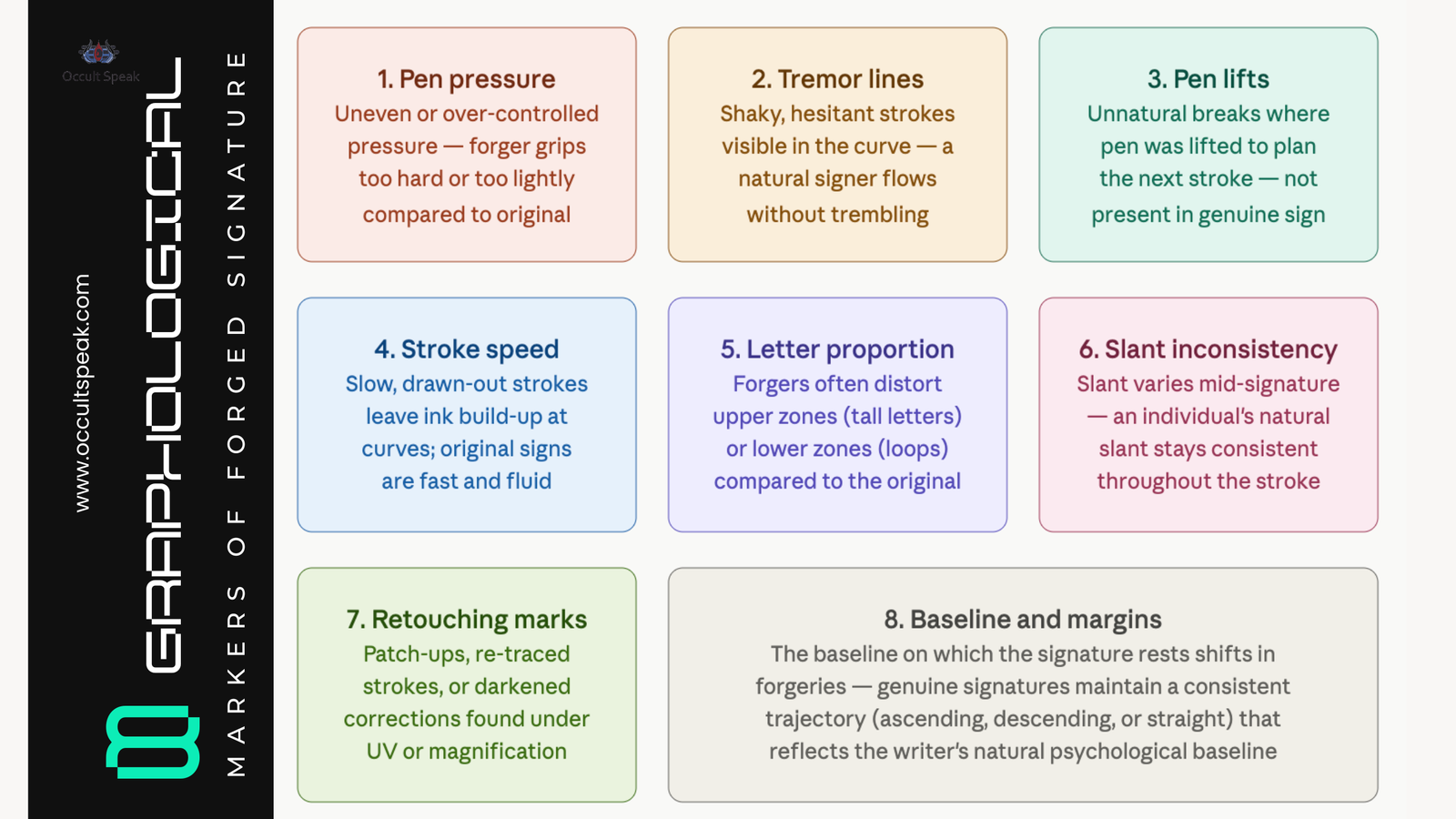
Here are the key graphological pointers for identifying a forged signature.
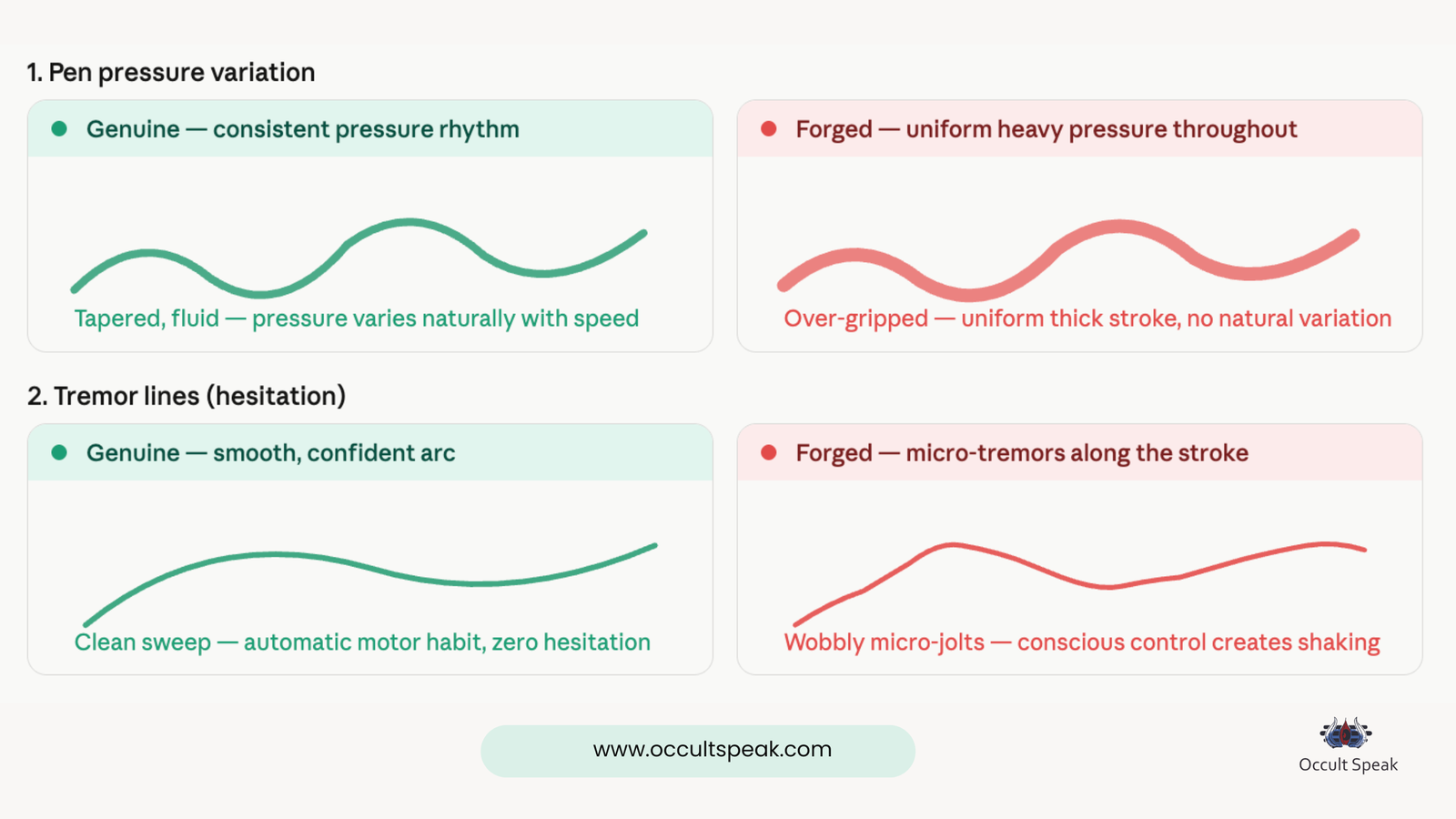
Pen Pressure Variation in Forged Signature
- Pen Pressure Anomalies In graphology, pen pressure reflects the writer’s vitality and emotional intensity. Forgers either press too hard (anxiety) or too lightly (timidity).
The pressure map of a genuine signature is subconscious and difficult to replicate. Look for ink spread at curves and entry strokes under magnification.
- Tremor and Hesitation Lines A natural signer never “thinks” about the stroke — it’s automatic.
Forgeries show micro-tremors, wobbly arcs, and hesitation marks, especially in circular letters and loops, because the forger is consciously controlling what should be an unconscious act.
Forged Signatures Explained : Meaning, Consequences, and Prevention Tips
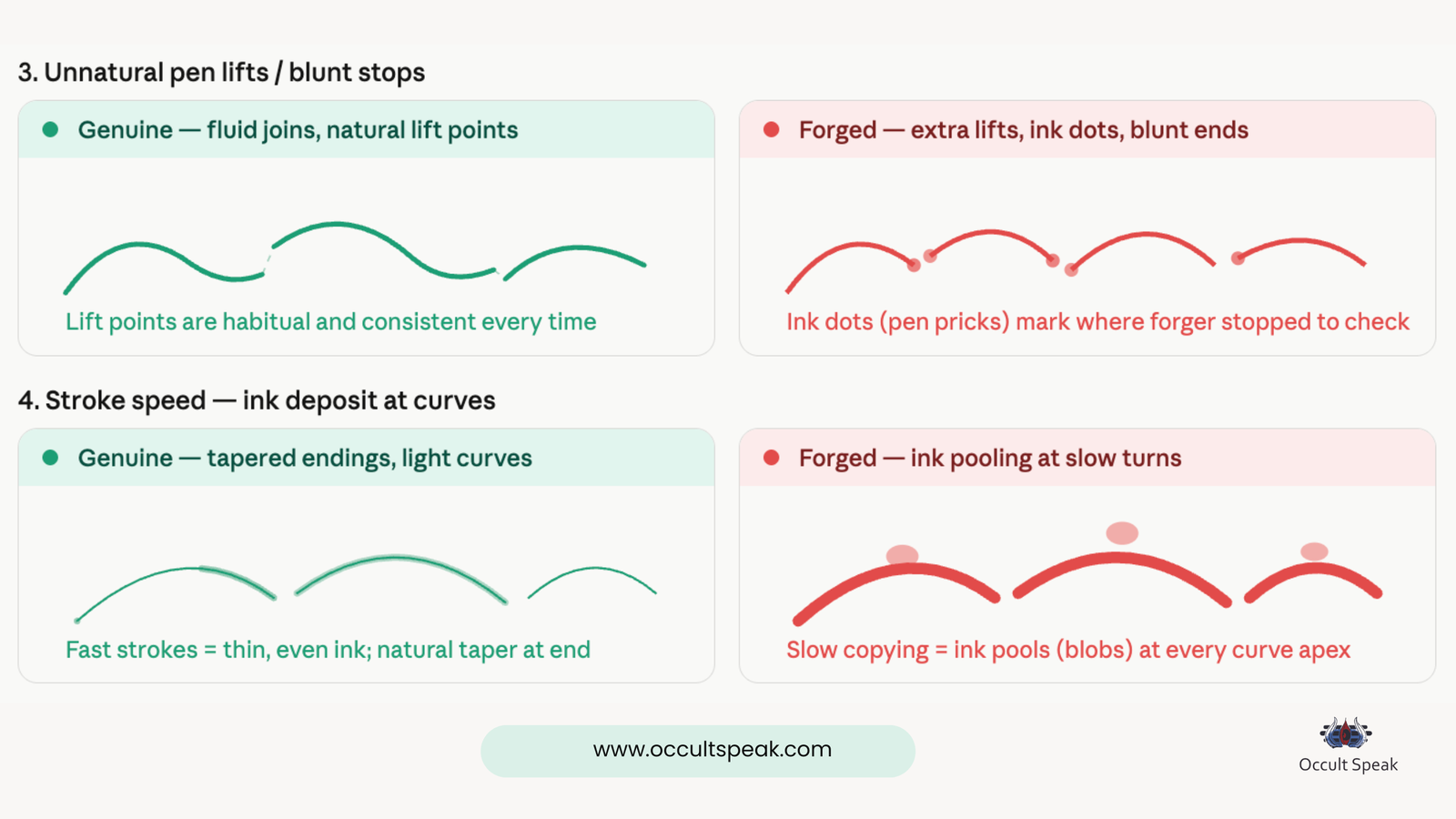
- Unnatural Pen Lifts Genuine signatures have a fixed pattern of where the pen lifts (between letters or specific strokes).
Forgers often lift the pen at the wrong points to study the reference, leaving tell-tale ink dots (known as “pen pricks”) or blunt stroke endings.
- Slow Stroke Speed (Pastosity) Speed reveals itself through ink deposition. Slow forgery strokes create “pasty” thick deposits at curves and directional changes.
Original signatures — being habitual — are executed fast, creating tapered, clean stroke ends.
Forged Signatures Explained : Meaning, Consequences, and Prevention Tips
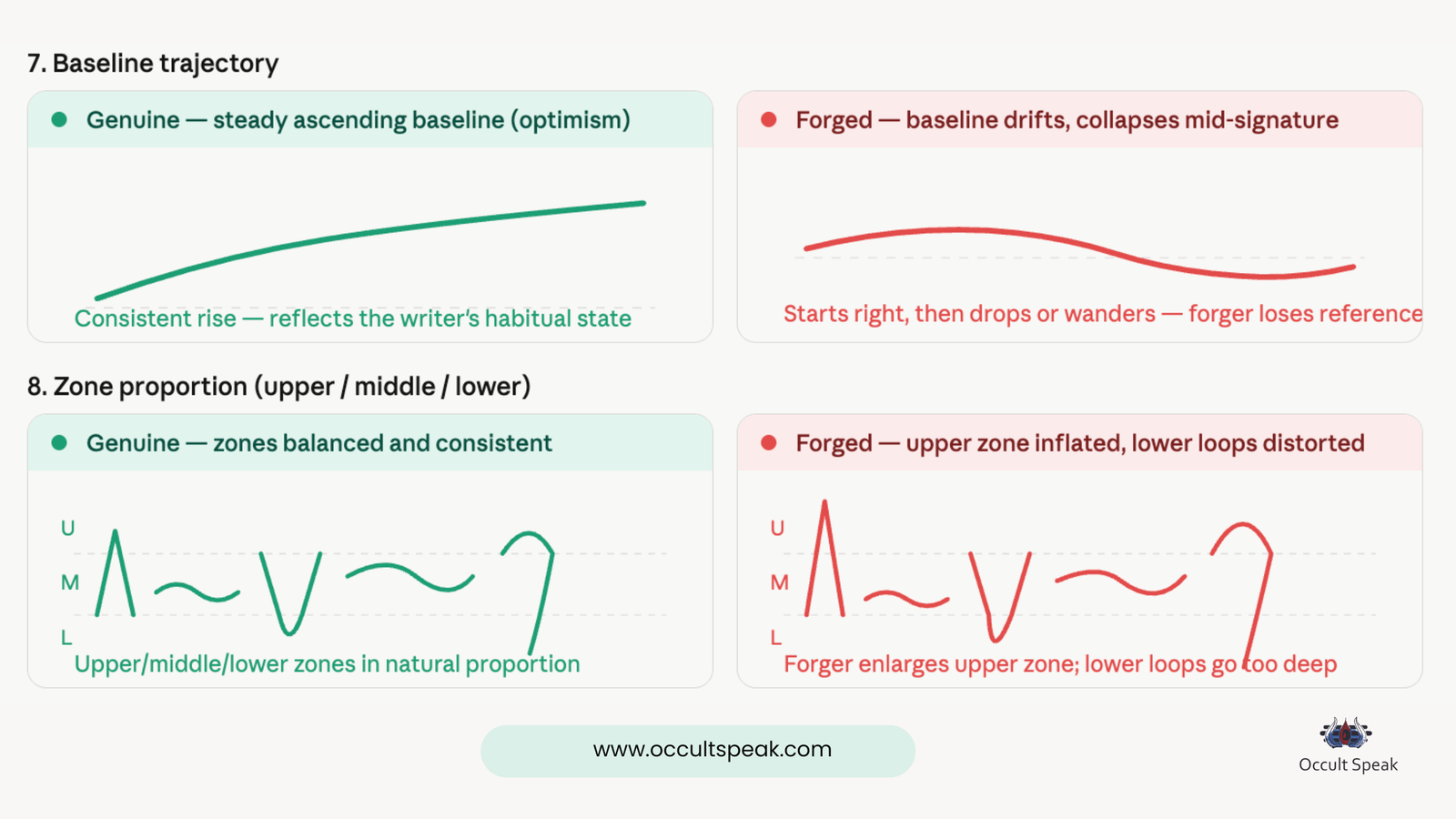
- Zone Proportion Distortion Graphology divides script into upper zone (tall letters like b, d, h), middle zone (a, e, o), and lower zone (g, y, p loops). Forgers obsess over the overall shape and neglect zone ratios.
Any disproportionate zone expansion or compression is a red flag.
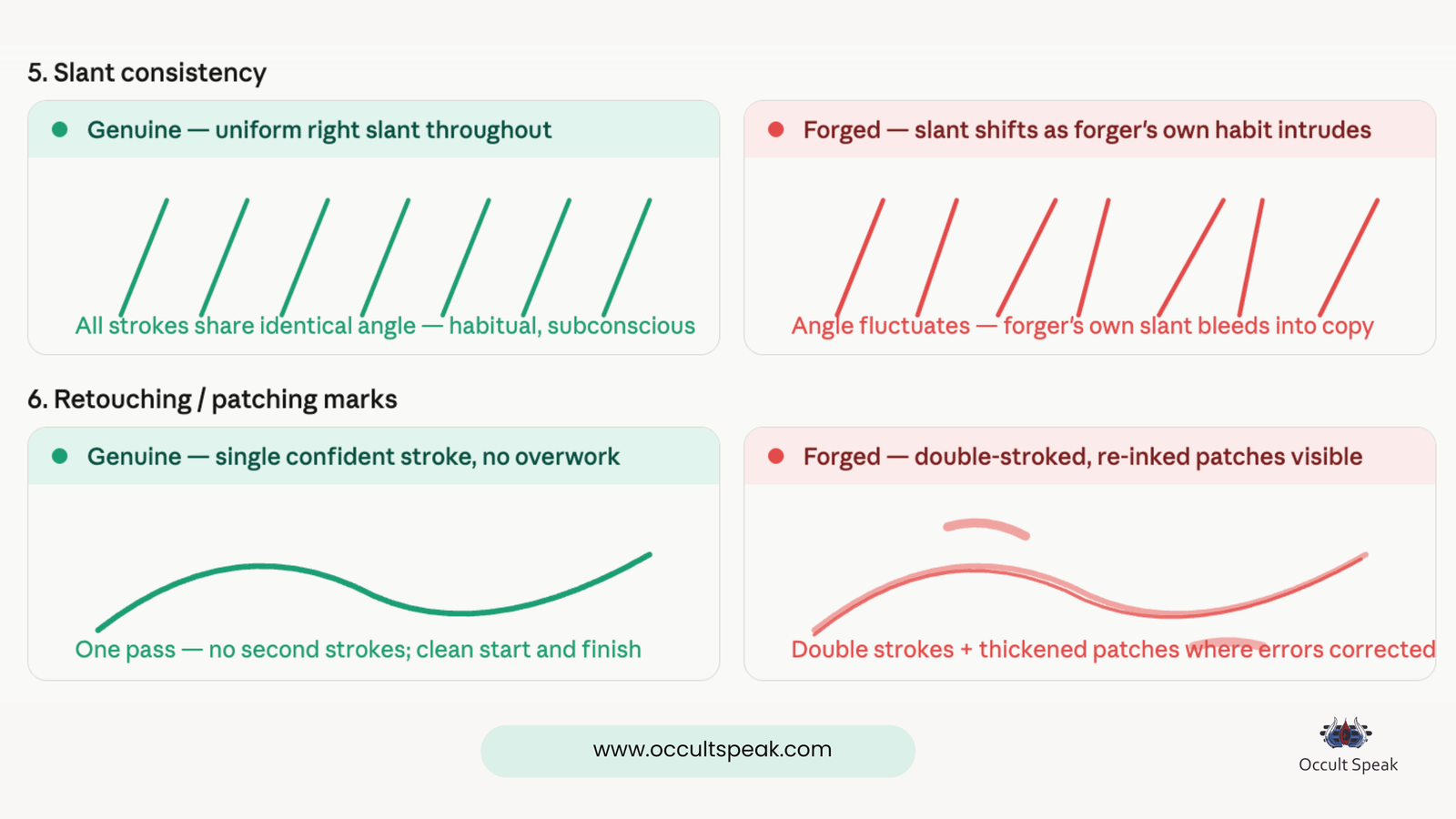
- Slant Inconsistency A person’s natural writing slant — right-leaning (extroversion), left-leaning (introversion), or vertical (control) — stays consistent within a single signature.
Forgeries often shift slant mid-stroke, especially where the forger’s own natural slant “bleeds” into the imitation.
Forged Signatures Explained : Meaning, Consequences, and Prevention Tips
- Retouching and patching Under UV light or 10x magnification, retouched forgeries reveal double strokes, re-inked portions, or areas where a shaky first attempt was corrected.
These patch-up marks are absent in a single, confident genuine signature.
- Baseline and Overall Trajectory In graphology, a rising baseline indicates optimism; descending signals fatigue. A genuine signature maintains its baseline trajectory consistently.
Forgeries waver mid-way as the forger runs out of reference points to copy and their own handwriting habit takes over.
Forged Signatures Explained : Meaning, Consequences, and Prevention Tips
What are other simple tools to detect Forged Signature ?
The “ending stroke” test — how and where a signature terminates (sharp flick, loop, or blunt stop) is highly individual and extremely hard to forge accurately.
Graphology principle: a genuine signature is an unconscious motor programme. The forger’s conscious mind interrupts it — producing tremors, pressure changes, slant drift, and zone distortion that a trained graphologist can identify.
These illustrated patterns are based on forensic document examination conventions used in questioned document analysis.
Signature vs. regular handwriting comparison — graphologists often compare the forged signature against other handwriting samples on the same document.
Tools used — UV lamp, ESDA (Electrostatic Detection Apparatus), and digital pressure mapping in forensic cases.
Regards,
Nirav Hingu

Leave a Reply