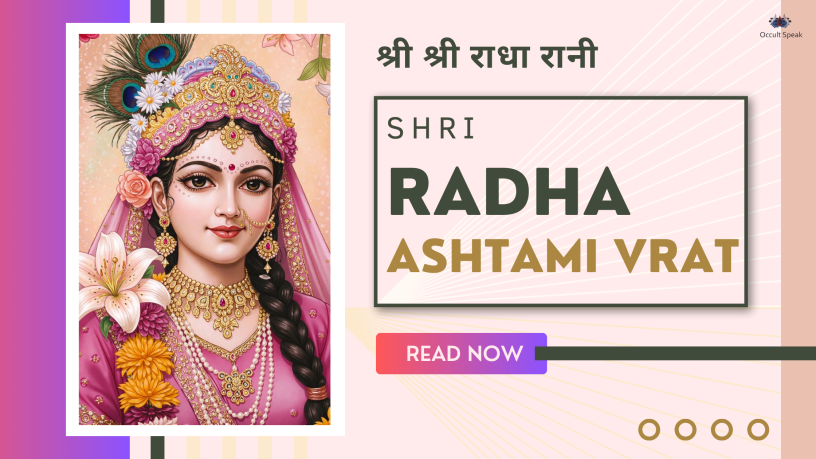

Radha Ashtami Vrat : Radha Asthami is a significant Hindu festival celebrating the birth of Shri Radha Rani, an ardent devotee of Lord Krishna.
It is especially celebrated in Brajbhoomi, Mathura, and Vrindavan with special festivities and processions.
Devotees observe fasts, sing devotional songs, and worship Radha Rani to receive her blessings, believing that observing the fast brings love, harmony, and peace into their lives.
When is Radha Astami Vrat ?
Radha Ashtami falls on the 8th day of the bright lunar fortnight (Shukla Paksha) in the Hindu calendar month of Bhadrapada.
What are some of the ‘Don’ts’ to be mindful of during the Radha Ashtami Vrat?
Do’s on Radha Ashtami Vrat:
- Wake up early, bathe, and wear clean clothes to purify mind and body before taking the vow of fasting and worship.
- Observe Brahmacharya (celibacy) throughout the day, maintaining physical and mental restraint and purity.
- Offer only fresh and pure items like fruits, milk, milk-based sweets, and flowers as offerings to Radha Rani; avoid stale or half-cooked items.
- After the puja, recite or listen to the Radha Ashtami Vrat Katha to enhance the spiritual significance of the fast and achieve inner peace.
- Recite Radha Rani 28 Names once or 108 times, then rest 24 hours keep chanting Radha Naam in mind.
- Break the fast only during the auspicious muhurat (auspicious time) to ensure the full benefits of the worship.
- Break the fast by consuming the prasad (offering) that was offered to Radha Rani during the puja.
- Before breaking the fast, donate food, clothes, or money to the needy. Serving cows is also considered very auspicious.
- After breaking the fast, seek blessings from elders and seniors.
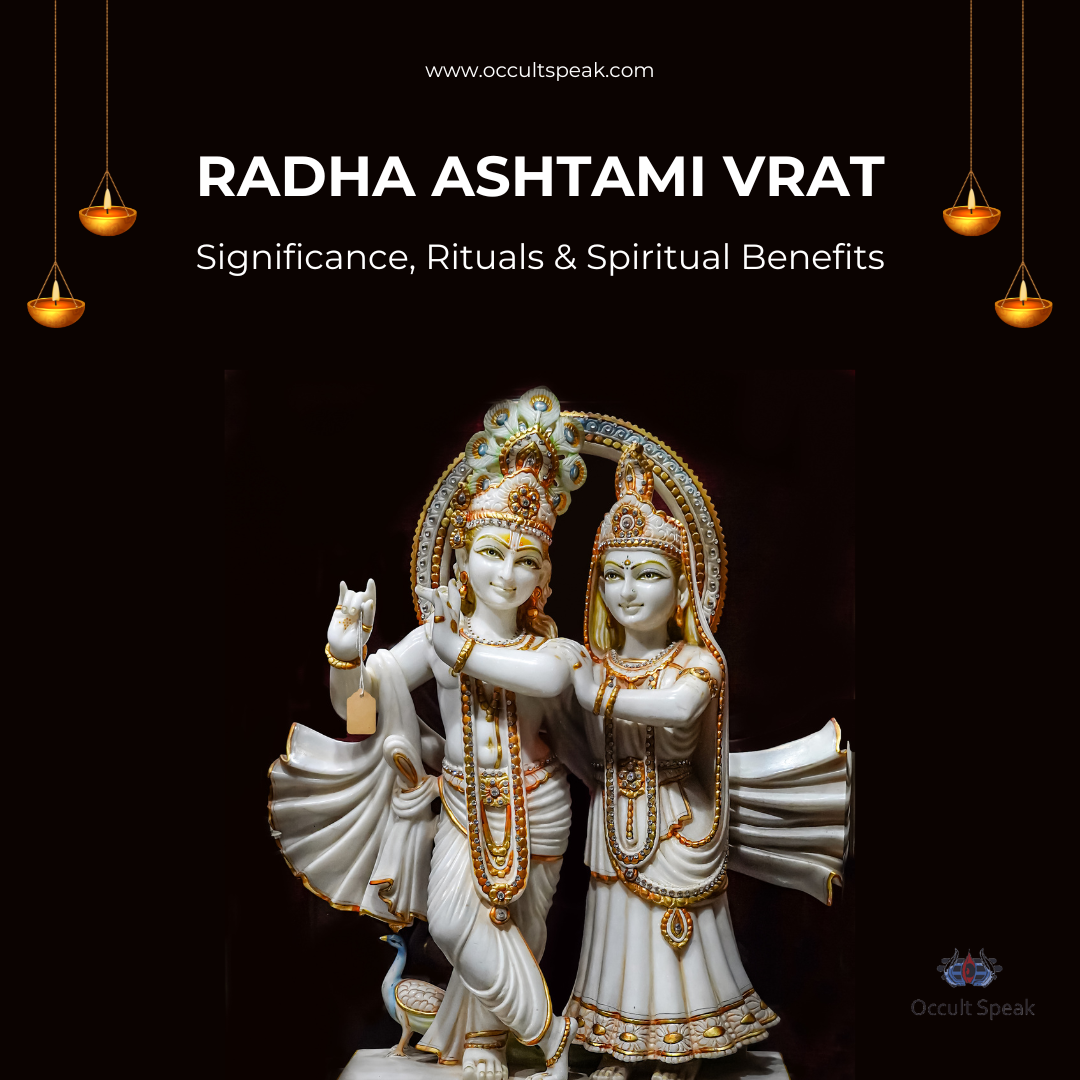
Radha Astami Vrat
Don’ts on Radha Ashtami Vrat:
- Do not taste or make the offerings impure in any way.
- Do not sleep during the day.
- Avoid cutting hair, nails, or beard.
- Do not wear black or very dark-colored clothes; red and yellow are preferred.
- Women should tie their hair and cover their heads with a chunari (scarf) during puja; men should also cover their heads.
- Do not wash hair on Radha Ashtami; if necessary, do it before the अष्टमी tithi (date) begins.
Radha Rani ke 28 Naam
Here’s the spiritual meaning of the 28 divine names of Shri Radha Rani – each name reflects her transcendental nature, qualities, and relationship with Shri Krishna and the universe:
1. Radha (राधा)
The one who is worshipped by all; she attracts even Shri Krishna’s heart and is the supreme embodiment of devotion (Bhakti).
2. Raseshwari (रासेश्वरी)
The Queen of the divine Rasa Lila – ruler of transcendental love and the eternal consort of Krishna in the dance of divine bliss.
3. Ramya (रम्य)
The most charming and delightful; the very form of eternal beauty and grace that enchants both mortals and immortals.
4. Krishnamatra-Adhidevata (कृष्णमत्राधिदेवता)
The supreme presiding goddess of Krishna alone; she lives only for Krishna and embodies the highest devotion.
5. Sarvadya (सर्वाद्या)
The origin of everything; all creation, love, and energy spring from her divine presence.
6. Sarvavandya (सर्ववन्द्या)
Worthy of worship and reverence by gods, sages, humans, and even Krishna himself bows to her love.
7. Vrindavan-Viharini (वृन्दावनविहारिणी)
The one who eternally roams in Vrindavan, sanctifying it as the divine land of love and devotion.
8. Vrinda-Radhaya (वृन्दा राधाया)
The eternal friend of Vrinda (Tulsi Devi); her very name sanctifies the forest of Vrindavan.
9. Rama (रमा)
The embodiment of supreme joy and bliss; source of divine happiness to Krishna and devotees.
10. Ashesha Gopi Mandala Poojita (अशेषा गोपी मंडल पूजिता)
Worshipped and revered by all the gopis; the foremost among them and their leader in divine love.
11. Satya (सत्य)
The absolute truth; her love and devotion are eternal, real, and never-ending.
12. Satyapara (सत्यपरा)
The one devoted to truth; she symbolizes pure and unchanging devotion beyond illusion.
13. Satyabhama (सत्यभामा)
The essence of true existence; this reflects her as the highest treasure of truth and love.
14. Shri Krishna Vallabha (श्री कृष्णवल्लभा)
The beloved of Shri Krishna; the one closest to his heart.
15. Vrishabhanu-Suta (वृषभानुसुता)
The divine daughter of King Vrishabhanu; reminding that she appeared on Earth to bless humanity.
16. Gopi (गोपी)
The foremost of all Gopis, representing supreme devotion and surrender to Krishna.
17. Moola Prakriti (मूलप्रकृति)
The root nature, the primordial energy from which the entire creation manifests.
18. Ishwari (ईश्वरी)
The supreme goddess, ruler of all, consort of the Supreme Lord.
19. Gandharva (गान्धर्वा)
The one skilled in celestial music and dance; her sweet voice enchants Krishna and creation.
20. Radhika (राधिका)
The most worshipful; she embodies the essence of divine devotion and love.
21. Ramya (रम्या)
The epitome of beauty and joy; the embodiment of blissful charm.
22. Rukmini Parameshwari (रुक्मिणी परमेश्वरी)
The supreme goddess who also appeared as Rukmini, Krishna’s queen in Dwaraka.
23. Paratparatara (परात्परतरा)
Higher than the highest; beyond even the gods, she is the supreme energy that governs all.
24. Purna (पूर्णा)
The complete one; full of love, devotion, wisdom, and divine energy.
25. Purna Chandra Vimanana (पूर्णचन्द्रविमानना)
Radiant like the full moon; she illuminates hearts with divine beauty and peace.
26. Bhukti-Mukti-Prada (भुक्ति-मुक्तिप्रदा)
The giver of both worldly joys (bhukti) and spiritual liberation (mukti).
27. Bhava Vyadhi Vinashini (भवव्याधि-विनाशिनी)
The destroyer of the disease of worldly existence; liberates devotees from the cycle of birth and death.
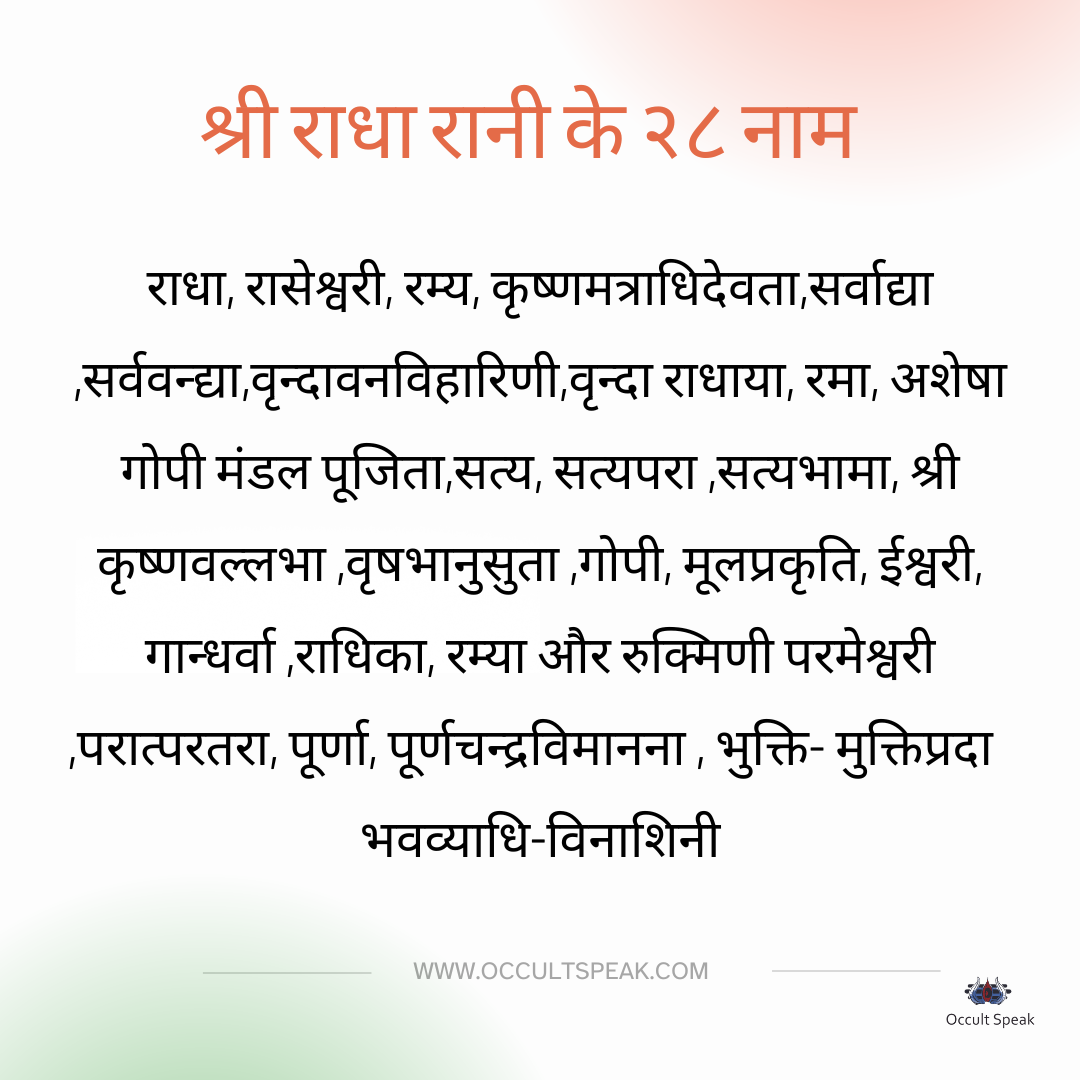
Radha Rani Ke 28 Naam
Radha (as the culmination)
The supreme form of Bhakti Shakti, the eternal companion of Krishna, the very soul of devotion.
These 28 names show Shri Radha Rani as the embodiment of divine love, the source of creation, the supreme goddess, the consort of Krishna, and the giver of both worldly fulfillment and ultimate liberation.
Would you like me to also create a chant/meditation guide with these 28 names—so devotees can use them in daily practice for blessings of Radha Rani?
When is Radha Ashtami celebrated, and what is the most auspicious time for puja?
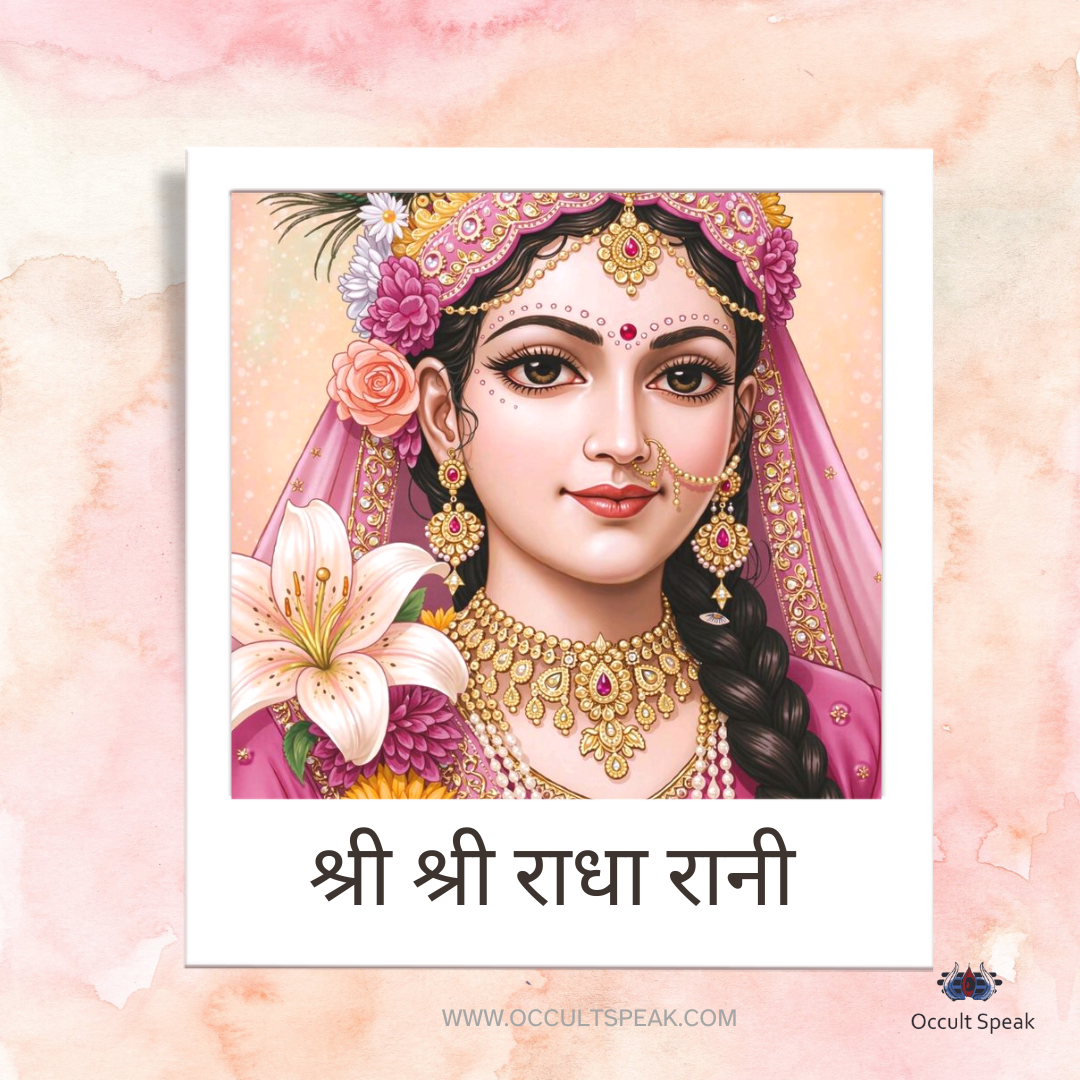
Shri radha rani
Radha Ashtami Tithi and Muhurat:
- Aparna Tithi begins: August 30, 10:46 PM
- Aparna Tithi ends: September 1, 12:57 AM
- Radha Ashtami (based on Udayatithi): August 31
- Most auspicious time for Puja: August 31, 11:05 AM to 1:38 PM
What are the benefits of fasting as Radha Asthami Vrat ?
Observing the Radha Ashtami fast is believed to bring love, harmony, and peace into the lives of devotees.
Here are the amazing benefits of observing Radha Ashtami Vrat:
-
Blessings of Goddess Radha – The vrat is believed to bring the divine grace of Radha Rani, enhancing love, devotion, and harmony in life.
-
Strengthens Bhakti for Lord Krishna – Fasting deepens devotion towards Shri Krishna, as Radha is considered the embodiment of pure love and devotion.
-
Purification of Karma – Observing the fast with sincerity helps in cleansing past negative deeds and invites positive energy.
-
Harmony in Relationships – Devotees believe Radha’s blessings bring peace, love, and understanding in marital and family life.
-
Spiritual Growth – The vrat helps in developing qualities like patience, selflessness, and surrender to divine will
Love & Light,
Nirav Hiingu
Radha Rani Darshan Abhilashi

Leave a Reply