


In the Shiv Puran, there are many stories of how even the most sinful and fallen individuals, if they utter the name of Lord Shiva at the final moment or even in deceit, by offering just a single bel leaf to Lord Shankar, Shiv’s followers prevent the messengers of death from taking them away.
They ensure that such individuals do not go to any undesirable place and must be taken to heaven. Sometimes, the followers of Shiva forcefully drive away the messengers of death and take the deceased to heaven. What is so special about the bel leaf (bilva patra) in the end?
Bilwa Tree and Vastu Dosha
What is the meaning of Bilwa ?
The meaning of Bilva or Bilwa or Bael is – the one that destroys diseases. By consuming Bilwa in a prescribed manner, you will become capable of helping others. You will become a benefactor i.e Shivswaroopa.
This is their true devotion to Lord Shiva. Consider it a miracle of nature that even ripe fruits during the monsoon season turn green again.
This is why it is written in scripture as a divine fruit. If you pluck its leaves and store them properly, even after six months, they remain fresh. In this way, you can find both raw and green fruits and leaves of this tree all year round.
Why plant Bilwa Tree ?
People plant Bael/Bilwa /Bilva trees in their courtyards, fields, or along village roadsides to benefit travelers, providing them with cool and comfortable shade, protecting them from the heat, and circulating fresh air throughout the day by reducing air pollution. Planting a Bael tree is considered a religious and meritorious act, especially when it is planted near a Shiva temple.
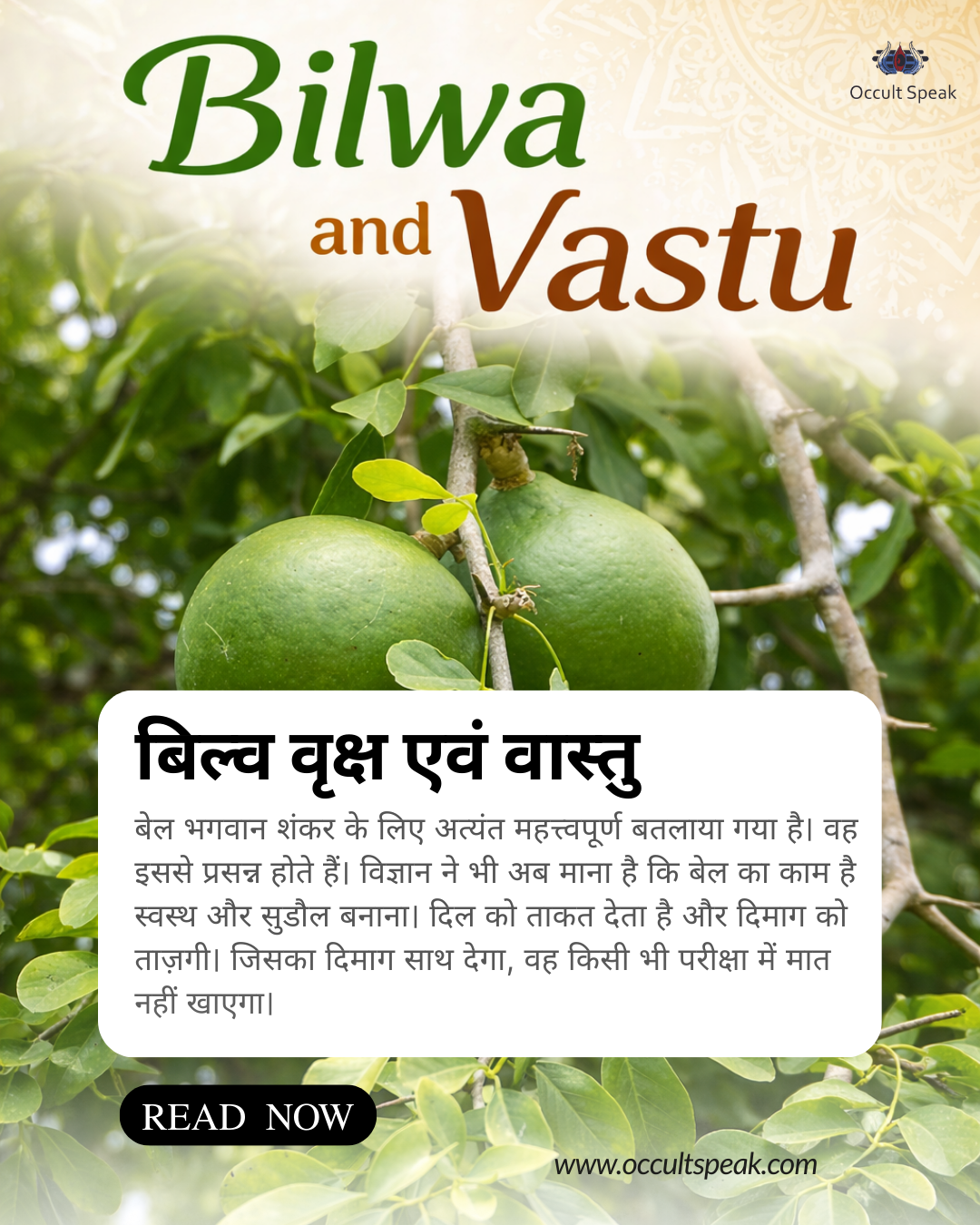
The Bael fruit holds special significance in the worship of Lord Shiva, and it is believed that offering it pleases him. Science also confirms that consuming Bael fruit improves health and physical well-being. It strengthens the heart and refreshes the mind, helping one face challenges and achieve success.
In ancient texts, the bael fruit is also known as “Shailusha,” meaning a beautiful and well-formed fruit. Just as its rind is tough, those who consume it remain healthy and attractive. Just as minor storms cannot alter its nature, minor illnesses do not affect those who consume it. Whether in summer or winter, a person who consumes bael according to its beneficial properties remains healthy and robust in all seasons. This fruit protects the body from head to toe and acts like a protective shield.
Bilwa Tree and Vastu Dosha
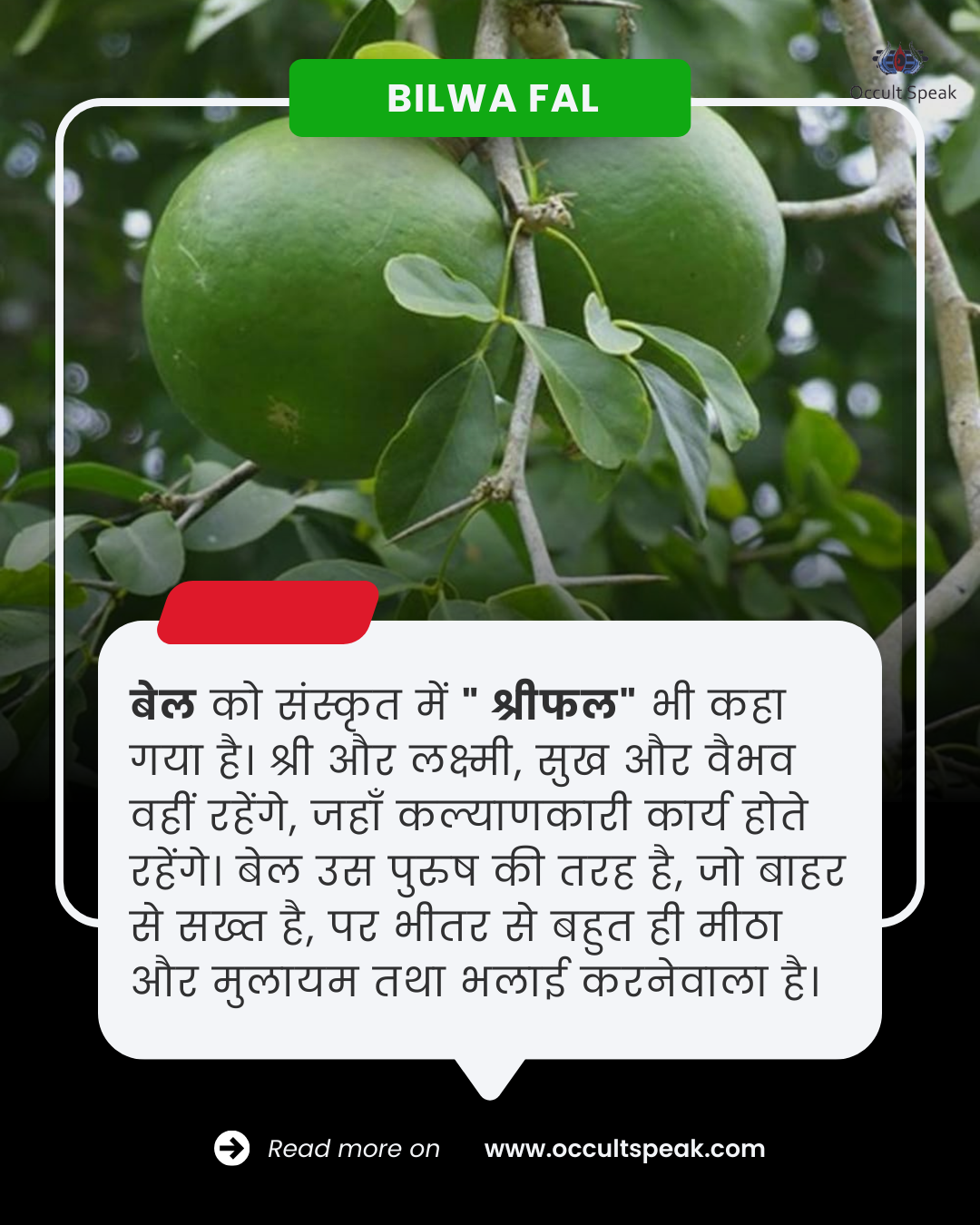
The fruit bell is also known as “Shriphal” in Sanskrit. Shri and Lakshmi will reside where benevolent deeds continue to take place. Just like a bell, it appears tough on the outside but is sweet, soft, and kind-hearted on the inside, spreading goodness.
In life, a person like the bael tree definitely achieves success. The pleasant shade of the bael tree, along with the surrounding air, brings joy to the body and mind like a virtuous person. Sushruta called it “snigdham.” Charak considered it to be snigdhoshnam (smooth and warm). Its fruit, leaves, and seeds contain volatile oil which is considered to be like nectar for humans.
According to religious beliefs, the food you eat can influence your state of mind. Consuming bael fruit can fill you with feelings of affection and gentleness. Eating bael fruit can also help in the circulation of nectar in your blood. Bael fruit, like nectar, can contribute to longevity.
The “Sushruta Samhita clearly states that raw bael fruit is hot and purgative, but when ripe, it becomes constipating. Those who use it according to its qualities can benefit differently from the same fruit (raw and ripe). There are only a few fruits that are filled with opposing qualities in their raw and ripe forms, allowing individuals to reap desired benefits.
Just like electricity powers both the cooler and the heater, similarly, Bilva tree can provide warmth and coolness as well. The bael fruit, in addition to being used as a medicine for various illnesses, can also be utilized for desired purposes based on the season and need by choosing ripe, unripe, or fully ripe fruit.
Bilwa Tree and Vastu Dosha
Through this, you can regulate the temperature in your body as desired, making you physically and mentally strong. Consuming bael fruit helps in controlling diseases and disorders, leading to their quick elimination.
Regular consumption of bael fruit can help cure even serious diseases. The branches, leaves, bark, and fruit of the bael tree all possess medicinal properties. Our ancestors recognized its benefits and incorporated it into religious rituals.
We have forgotten to take advantage of it. The one who is dear to Lord Shiva will also be a devotee of Lord Shiva. The true nature of an object will be revealed only when we benefit from its qualities. The bael tree is for our well-being and is a divine gift from nature. Every part of the bael tree is useful to us.
All parts of a tree, such as its leaves, bark, roots, fruits, and trunk, are useful to human life. The tree serves us with all its parts, and we benefit from the resources it provides. It is this selfless spirit that makes it worthy of reverence.
When nature created humankind, it provided not only protection but also the means of sustenance. Nature provided fruits, flowers, and medicinal plants, but it is up to us whether or not we take advantage of them. The bael fruit was deliberately made hard by nature so that its usefulness would not be affected even if it fell from a tall tree. Even if it cracks open, its thick pulp does not spill out, which is one of its unique characteristics.
The pulp of the bael fruit is not only soft but also sweet. Its unique texture and properties make it special. Tying a bael vine around the waist provides relief from problems like hemorrhoids. Additionally, consuming a powder made from crushing the hard outer shell of the bael fruit can alleviate all kinds of stomach problems.
Feeding a woman the raw pulp of the bael fruit is said to prevent labor pains. Placing bael leaves under a baby’s bed is believed to protect the child from the evil eye. Burying bael bark in the ground near the house is said to prevent snakes from entering the premises.
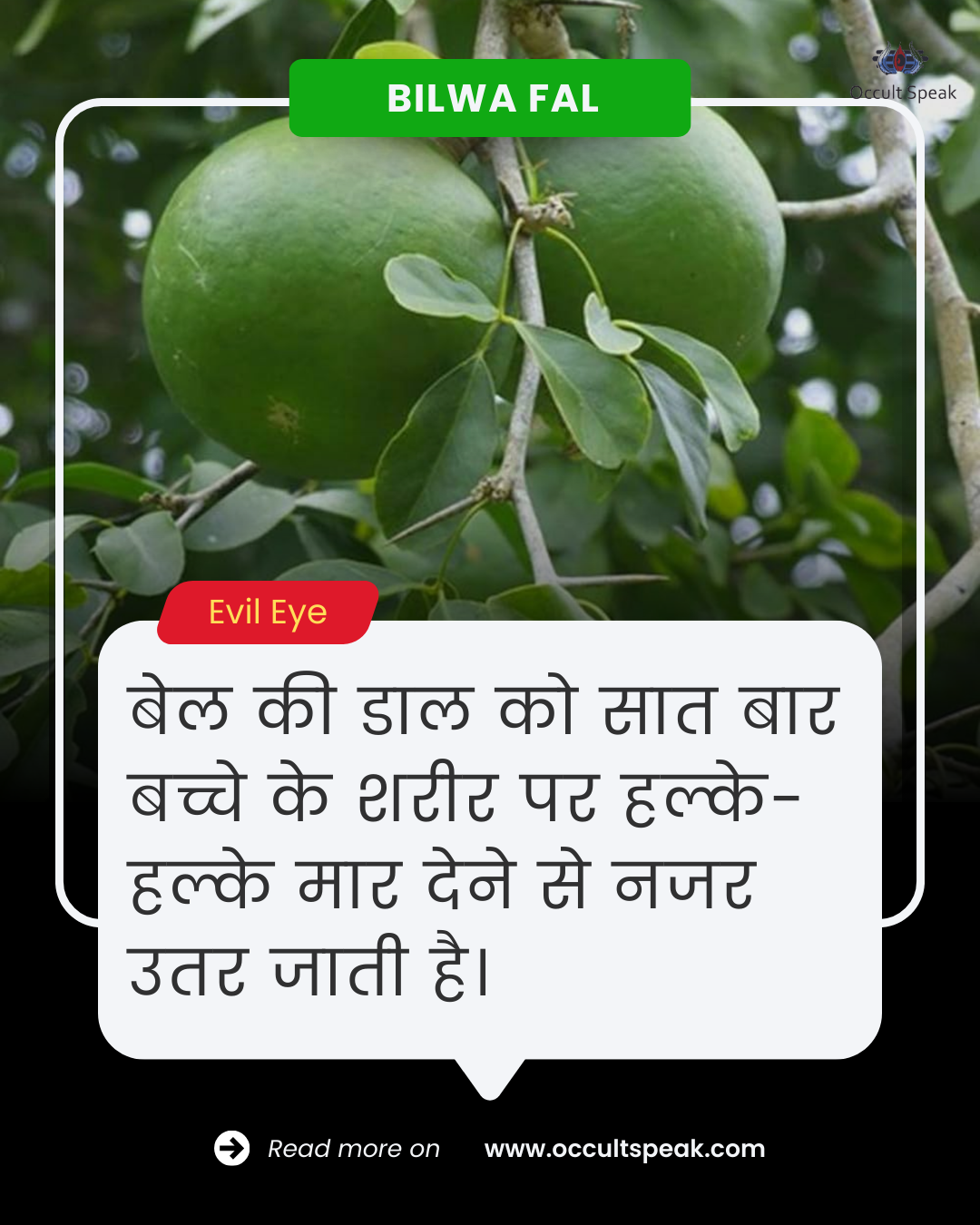
Gently tapping a branch of the Bael tree seven times on the child’s body is believed to remove the effects of the evil eye.
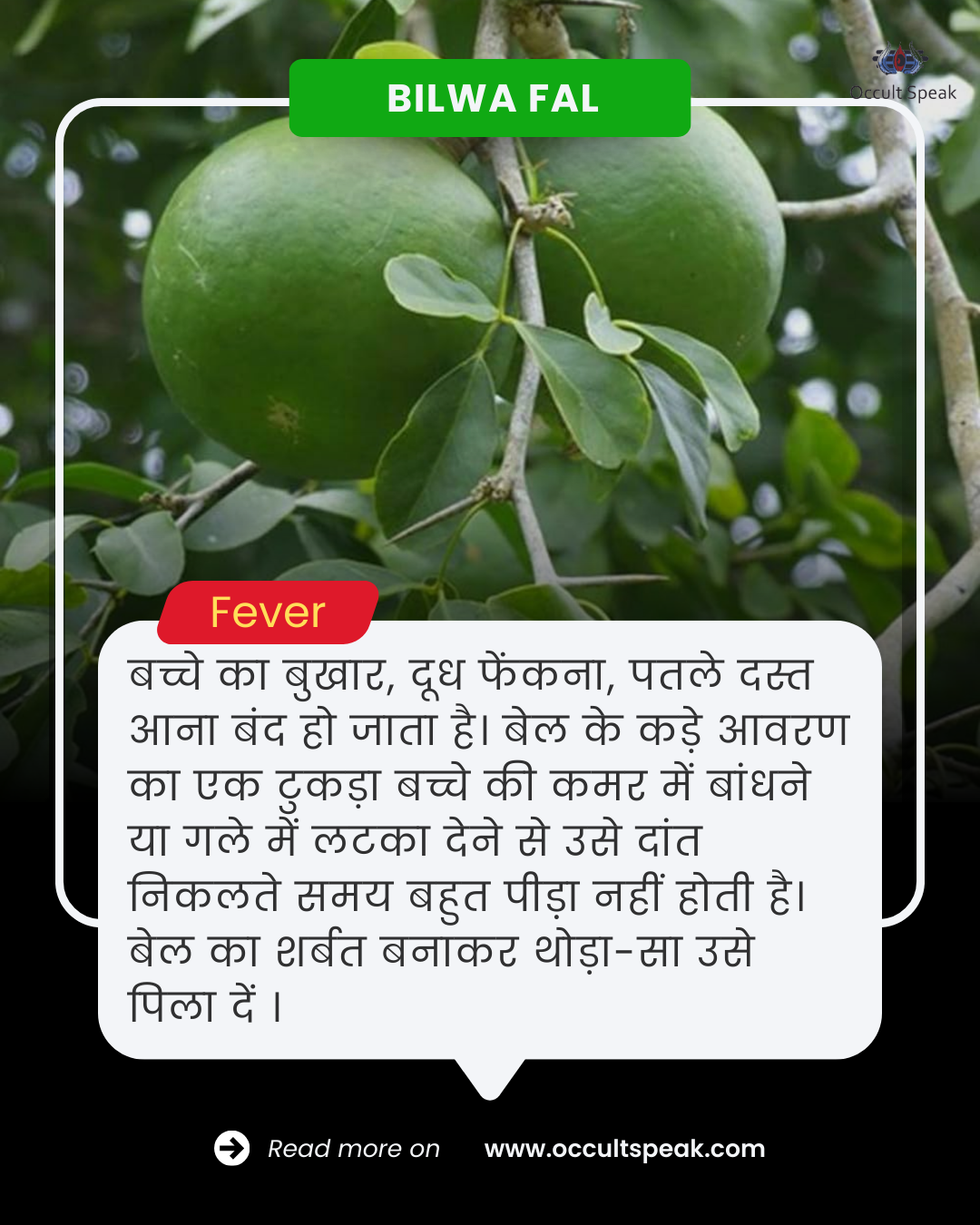
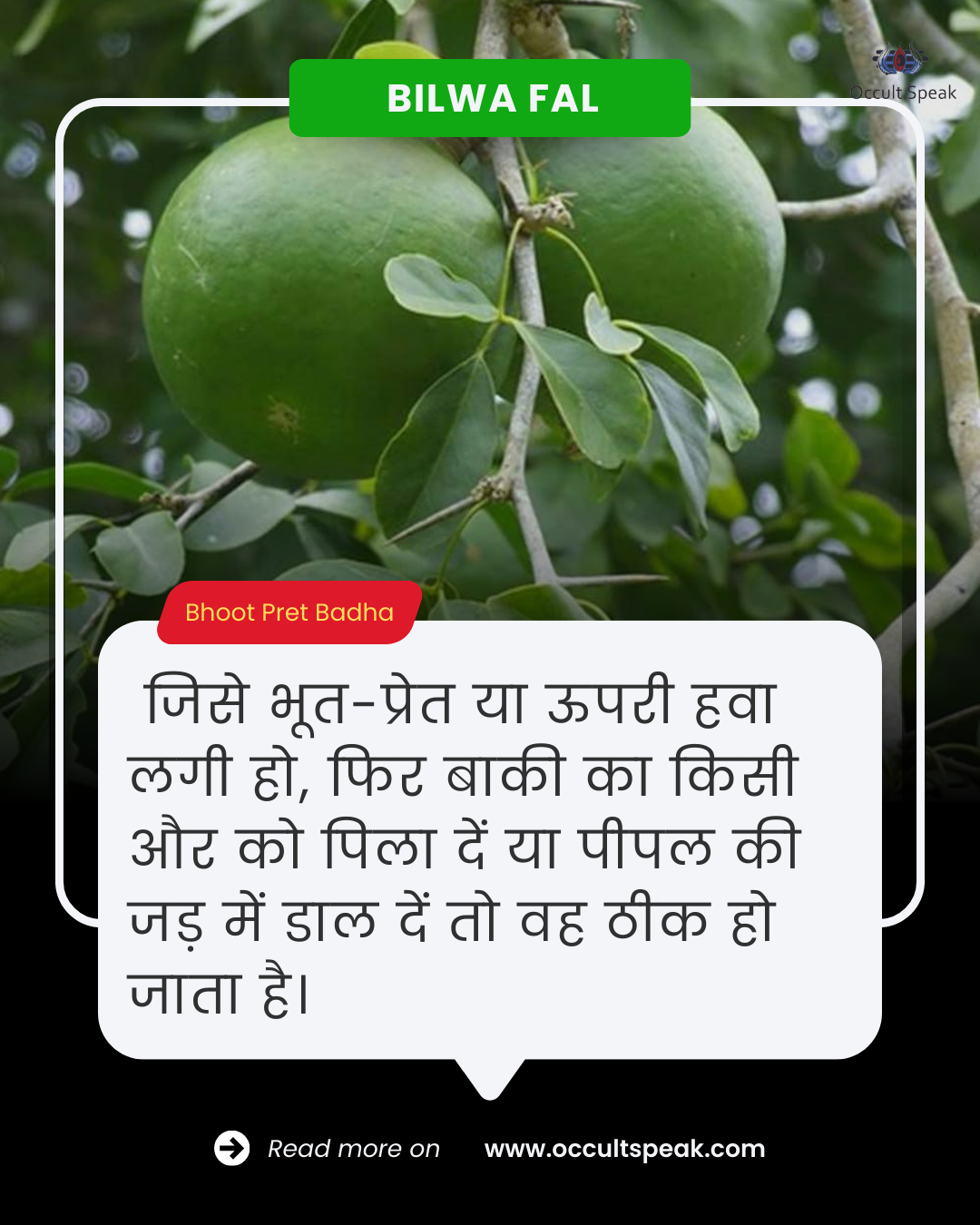
When a child has a fever, is vomiting milk, and has loose motions, these symptoms can be relieved by tying a piece of the bel tree bark around the child’s waist or hanging it around their neck while they are teething without causing much pain. By making a drink from the bel fruit and giving the child a little to drink, which may have been caused by evil spirits or bad air, then giving the rest to someone else or placing it in a pipal tree root, the child will recover.
Bilwa Tree and Vastu Dosha
Shiva’s blessings from the bilwa tree.
To receive the blessings of Lord Shiva, offering 108 bilva leaves while reciting the ‘Bilvashtakam’ during the worship of Chandramoulishwara Ashutosh bestows boundless wealth and prosperity.
This worship grants merit equivalent to performing a Somayagna, Ashwamedha, and hundreds of Vajapeya yagnas, all of which are attained by offering bilva leaves to Lord Shiva.
Brahma resides in the roots of the Bilva tree, Vishnu in its middle part, and Lord Shiva in its upper portion. This Bilva fruit originated from the breast of Goddess Lakshmi, and this tree is extremely dear to Lord Mahadeva.
Now, the Bilwa Ashtakam Stotra
त्रिदलं त्रिगुणाकारं त्रिनेत्रं च त्रयायुधम् । त्रिजन्मपाप-संहारमेकबिल्वं शिवार्पणम् ॥ १ ॥
त्रिशाखैबिल्वपत्रैश्च ह्येच्छिद्रः कोमले शुभैः । शिवपूजा करिष्यामि ह्येकबिल्वं शिवार्पणम् ॥ २ ॥
अखण्ड बिल्वपत्रेण पूजिते नन्दिकेश्वरे । शुद्धयन्ति सर्वपापेभ्यो ह्येकबिल्वं शिवार्पणम् ॥ ३ ॥ शालिग्रामशिलामेकां विप्राणां जातु अर्पयेत् । सोमयज्ञ महापुण्यमेकबिल्वं शिवार्पणम् ॥ ४ ॥ दन्तिकोटिसहस्त्राणि वाजपेयशतानि च । कोटिकन्या महादानमेकबिल्वं शिवार्पणम् ॥ ५ ॥
लक्ष्म्याः स्तनत उत्पन्नं महादेवस्य च प्रियम् । बिल्ववृक्षं प्रयच्छामि ह्येकबिल्वं शिवार्पणम् ॥ ६ ॥
दर्शनं बिल्ववृक्षस्य स्पर्शनं पापनाशनम् । अघोरपापसंहारमेकबिल्वं शिवार्पणम् ॥ ७ ॥
मूलतो ब्रह्मरूपाय अग्रतः शिवरूपाय ह्येकबिल्वं मध्यतो विष्णुरूपिणे ।
शिवार्पणम् ॥ ८ ॥
बिल्वाष्टकमिदं पुण्य यः पठेकच्छिवसन्निधौ । सर्वपापविनिर्मुक्तः शिवलोकमवाप्नुयात् ॥ ९ ॥
Bilwa Tree and Vastu Dosha
Meaning of Bilwa Ashtakam in Hindi
भगवान शिव को अर्पित किया गया एक बिल्व पत्र, जो तीन पत्तियों वाला, तीन गुणों का प्रतीक और तीन नेत्रों वाला है, वह सभी पापों को नष्ट करने वाला है। मैं शिव पूजा के लिए तीन शाखाओं वाले बिल्व पत्रों का उपयोग करूंगा, जो शुभ और कोमल हैं।
एक अखंड बिल्व पत्र से नंदिकेश्वर की पूजा करने से सभी पापों से मुक्ति मिलती है। एक शालिग्राम शिला को ब्राह्मणों को अर्पित करने का महत्व है, लेकिन एक बिल्व पत्र शिव को अर्पित करना सोमयज्ञ के समान पुण्य है।
दंतिकोटि साहस्त्र और वाजपेय शतानि के दान के समान एक बिल्व पत्र शिव को अर्पित करना है। बिल्व वृक्ष लक्ष्मी के स्तन से उत्पन्न हुआ है और महादेव को प्रिय है, इसलिए मैं इसे शिव को अर्पित करता हूं।
बिल्व वृक्ष का दर्शन और स्पर्शन पापों को नष्ट करने वाला है। बिल्व पत्र का मूल ब्रह्म का रूप है, मध्य विष्णु का रूप है और अग्र भाग शिव का रूप है। जो व्यक्ति शिव के समक्ष यह बिल्वाष्टक पढ़ता है, वह सभी पापों से मुक्त हो जाता है और शिव लोक को प्राप्त करता है।
The Mystery of the Bilwa plant in Vastu
Planetary movements have a profound impact on human behavior. Using Bael leaves is an effective way to appease the planets. The power of Lord Shiva resides in these leaves, which helps to mitigate the negative effects of planetary influences.
During the Rahu period, offering clean Bael leaves inscribed with a mantra made of vermilion to Lord Shiva on Saturdays can help calm planetary disturbances.
This disturbance will subside. Also, donate black sesame seeds. This should be done for seven consecutive Saturdays.
The pieces of the Bael fruit are used as sacrificial offerings in the Shri Yagna and Lakshmi Yagna, and offering a whole Bael fruit at the conclusion of the Yagna is considered highly auspicious.
According to one interpretation of the Shri Sukta, the Bael / Bilwa fruit plays a significant role in the creation of gold. Having a Bael tree outside the house or in the temple premises is considered very auspicious, and ideally, the tree should be located in the east or northeast direction.
Regards,
Nirav Hingu

Leave a Reply