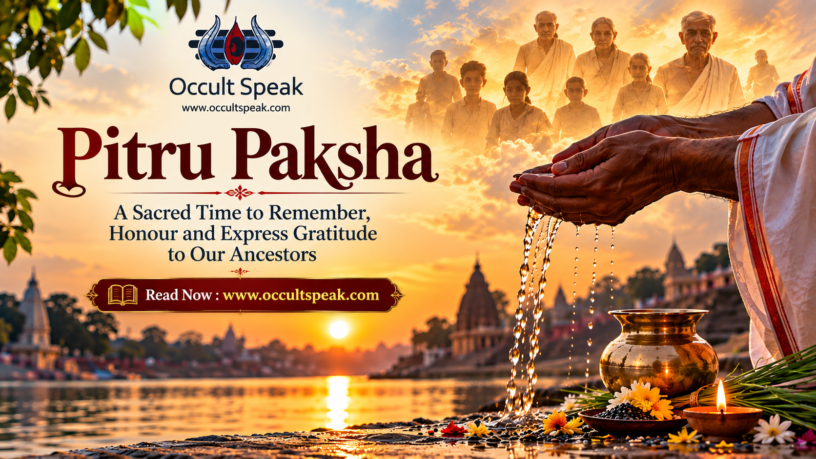

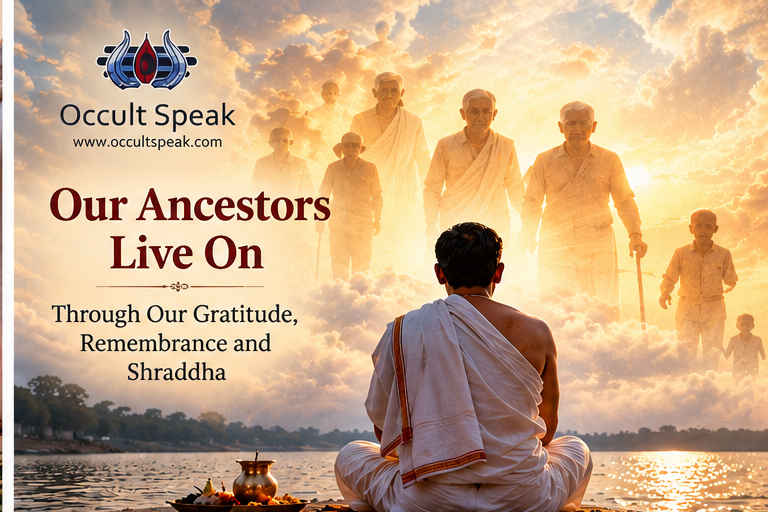
Shraddh & Pitru Paksha, traditionally known as Pitru Paksha Mahalaya, is a period dedicated to remembering and honouring one’s ancestors through Shraddha, Tarpana, Pindadana, charity and remembrance.
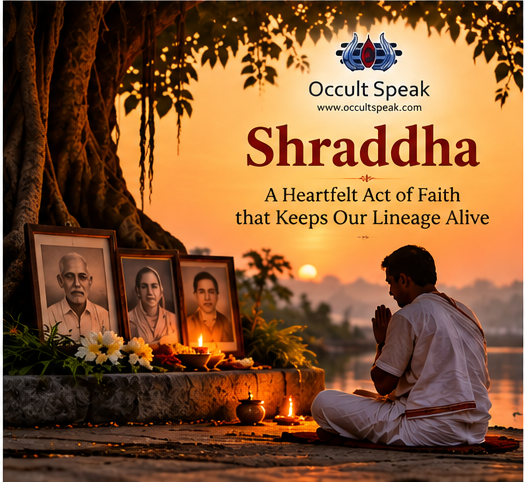
According to the traditional literature preserved in the Gita Press’s Antya Karma–Shraddha Prakash, Shraddha is not merely a ritual performed after death; it is a sacred act performed with श्रद्धा (faith and reverence) for the Pitrs.
The deeper message of Pitru Paksha is therefore not simply about performing a ceremony. It is about gratitude toward the lineage from which we have received our body, family, संस्कार, knowledge and material inheritance.
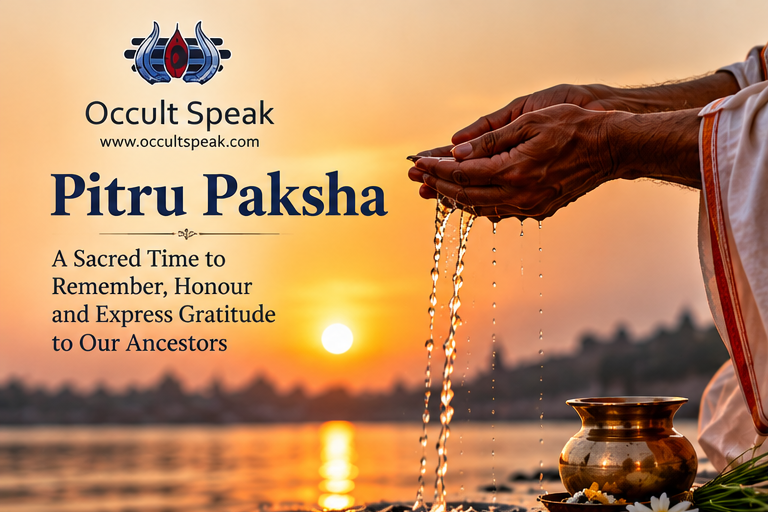
Pitru Paksha Tarpan
What Does Shraadh Actually Mean?
The word Shraadh comes from Shraddha—faith, reverence and sincere devotion.
The Gita Press text defines Shraadh as a prescribed act performed with faith for the Pitrs. It also cites traditional definitions in which offerings made properly, at the appropriate place and time, to suitable recipients for the purpose of the ancestors constitute Shraddha.
This gives us an important insight:
The heart of Shraddha is श्रद्धा itself—not merely the external ritual.
The ritual provides the traditional framework, while faith, respect and remembrance provide its inner meaning.
Why Is Pitru Paksha Shraadh Considered Important?
The Antya Karma–Shraddha Prakash specifically states that Pitru Paksha has a special relationship with the ancestors and gives particular importance to performing Shraddha on the death-tithi of one’s departed ancestors during this period.
The text explains the traditional understanding of the relationship between the fortnight and the Pitrs and connects the observance with the Krishna Paksha of Ashwin, describing why this period came to be especially associated with Pitru Shraddha.
It also cites the traditional teaching that performing Shraddha is associated with blessings such as progeny, longevity, health, prosperity and fulfilment of cherished aspirations. These are presented as scriptural/traditional claims rather than as scientifically established effects.\
Our_Ancestors_Live_On Earth
Is Pitru Paksha Shraadh Only for One’s Father?
No.
In the broader Shraadh tradition, the Pitrs encompass a lineage of departed ancestors rather than only one deceased parent.
The Gita Press text discusses various categories of ancestral rites and specifically describes Shraddha for the wider ancestral line.
Its contents include discussions of father, grandfather and great-grandfather, as well as different forms of Shraddha and Sapindikarana.
Therefore, Pitru Paksha can be understood as a time for remembering one’s ancestral lineage as a whole.
This is one reason the observance carries a much deeper meaning than an annual remembrance of a single individual.
Why Is the Death Tithi Important in Shraadh Pakshya?
One of the most important principles of traditional Shraadh is Tithi.
The Gita Press work specifically includes a section titled “मृत्युतिथि तथा पितृपक्षमें श्राद्ध करना आवश्यक”, discussing Pitru Shraadh on the death anniversary and during Pitru Paksha.
Traditionally, when the exact death-tithi is known, the Shraddha is performed on that corresponding lunar tithi.
For example, the observance is not necessarily based on the Gregorian calendar date on which the person died. It is determined according to the Hindu lunar tithi.
This distinction is extremely important because the Gregorian date changes from year to year while the lunar tithi follows the traditional Panchanga system.
What If the Exact Death Tithi Is Unknown?
This is an important practical question for many modern families.
The traditional Shraadh literature contains different provisions for circumstances in which the normal annual procedure cannot be followed.
This is one reason Sarva Pitru Amavasya, the Amavasya associated with the conclusion of Pitru Paksha, has become especially significant in popular practice.
It is traditionally used by many families for ancestors whose specific tithi is unknown or when the family wishes to make a collective offering to the departed ancestors.
For an actual Shraddha ceremony, however, the precise procedure can vary according to family tradition, Shakha, regional custom and the advice of a qualified priest.
How to Do Pinda Daan
The Importance Shraadh & Tarpana
Tarpana literally carries the idea of satisfying or offering respectfully.
Water, generally accompanied by black sesame (tila) and other prescribed elements, plays an important role in Pitru-related rituals.
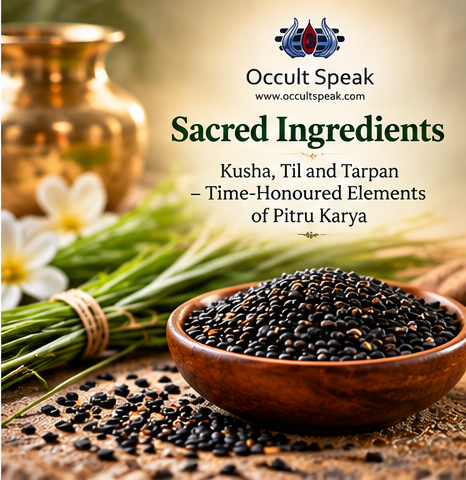
The Gita Press text repeatedly describes the use of tila, water and kusha in various Shraddha procedures.
This is why the simple image of water offered with reverence toward the ancestors has such a central place in Hindu ancestral observances.
The ritual may appear simple externally, but traditionally it represents:
Water → remembrance → gratitude → offering → ancestral reverence.
Why Are Kusha and Black Sesame Used in Shraadh?
Two substances repeatedly appear in traditional Pitru-karya:
1. Kusha
Kusha grass has an important ritual role in Vedic and post-Vedic ceremonies.
The Gita Press text contains a dedicated discussion of the importance of kusha in Shraddha and also explains which kusha should or should not be used.
2. Black Sesame — Til
Black sesame is another important substance in Pitru rituals.
The text repeatedly describes tila and tila-jala in the procedures for offerings and Tarpana.
Thus, when we see the traditional Pitru Paksha practice of offering water with black sesame, it is not a modern invention—it belongs to a much older ritual framework.
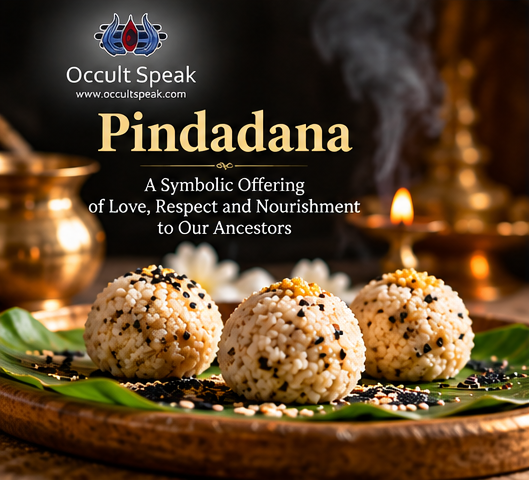
Pindadana — What Does the Pinda Represent in Shraadh ?
One of the most recognisable elements of Shraadh is the Pinda.
A Pinda is traditionally an offering prepared according to prescribed ritual procedures.
The Gita Press work contains extensive discussion of Pindas, including their preparation, size, placement and associated procedures. Its contents also include Pindadana, Pinda-related rules and Sapindikarana.
At a symbolic level, the Pinda can be understood as an expression of nourishment, remembrance and one’s continuing relationship with the ancestral lineage.
How to Do Shraadh Karma
Does Shraadh Depend Only on Wealth?
This is one of the most beautiful ideas in the text.
The Gita Press work discusses what should be done even when the person performing Shraadh has very limited financial resources. It gives an alternative in which the person, if unable to provide the customary materials, can sincerely remember and pray to the ancestors with devotion.
The text therefore makes an important distinction between: ritual resources
and sincere श्रद्धा.
This teaches that financial limitation should not automatically become a reason to abandon remembrance of one’s ancestors.
Shraadh Is More Than Food
A common modern misunderstanding is:
“Pitru Paksha means feeding Brahmins.”
The traditional framework is considerably broader.
The Gita Press text discusses:
- Shraddha
- Tarpana
- Pindadana
- Brahmana-bhojana
- Dakshina
- Charity
- Kusha
- Til
- Water
- Tulsi
- Prescribed food
- Appropriate place and time
- Ritual purity
- Different forms of Shraddha.
Thus, food is only one component of a much larger ritual system.
Why Is Brahmana Bhojana Mentioned in Shraadh Pakshya?
Traditional Shraadh includes the feeding of qualified Brahmanas as representatives within the ritual framework.
The Gita Press text specifically contains a section discussing whether Brahmana-bhojana completes the Shraadh and also discusses the characteristics of an appropriate Brahmana for Shraadh
The traditional idea is that the offering is made through a prescribed ritual channel with faith and intention toward the Pitrs.
It should therefore not be reduced merely to:
“feeding someone = Shraadh.”
The intention, sankalpa, procedure and prescribed elements are part of the traditional conception.
What Should Be Avoided During Shraadh?
The Antya Karma–Shraddha Prakash contains a remarkably detailed section on things considered prohibited during Shraddha.
It discusses restrictions concerning the person performing Shraddha as well as the person receiving the Shraddha meal.
Among the traditional restrictions discussed are various forms of indulgence, inappropriate food practices and certain activities.
The text also discusses restrictions concerning:
- Certain flowers
- Certain fragrances
- Certain vessels
- Inappropriate kusha
- Certain foods
- Ritual cleanliness
- Other procedural matters.
These rules should be understood as part of the traditional ritual discipline of Shraddha, rather than as universal medical or scientific rules.
Gaya Shraadh and the Sacred Geography of Ancestor Worship
The connection between Pitru Shraddha and Gaya is particularly important.
The Gita Press book contains a dedicated discussion of Gaya Shraddha,Pitru Stotra including its relationship with other important pilgrimage sites and forms of ancestral rites.
Gaya therefore occupies a special place in the Hindu sacred geography of Pitru worship.
For generations, families have travelled to Gaya to perform ancestral rites, particularly Pindadana and Shraadh.
This is also why the phrase:
“Gaya Shraadh” has become synonymous with an especially significant form of ancestral observance in Hindu tradition.
Sacred_Ingredients-for-Shraadh
Mahalaya and the Collective Remembrance of Ancestors
The term Mahalaya is closely associated with Pitru Paksha.
The Gita Press text explicitly refers to Mahalaya/Pitru Paksha while discussing special forms of Shraddha and the number of associated deities in the ritual framework.
The closing phase of Pitru Paksha therefore carries a powerful collective symbolism:
Those whose individual tithis are remembered are honoured individually; those whose details are forgotten are still remembered as part of the ancestral lineage.
That makes Pitru Paksha particularly relevant in today’s world, where many families have lost track of older generations.
The Deeper Spiritual Meaning of Pitru Paksha
Perhaps the most meaningful way to understand Pitru Paksha is through three principles:
1. Gratitude
We did not create ourselves.
Our body, family, language, culture, knowledge and many opportunities came through generations before us.
Pitru remembrance acknowledges this debt.
2. Continuity
Every family represents a chain:
Ancestors → Parents → Us → Future generations
Pitru Paksha reminds us that we are one link in this much larger chain.
3. Responsibility
Remembering ancestors also encourages us to think about what kind of legacy we ourselves will leave behind.
Thus Pitru Paksha is not only about looking backward.
It is also about looking forward.
A Powerful Thought from the Gita Press Tradition
The Antya Karma–Shraddha Prakash makes an especially significant point when discussing inability to perform Shraadh in the normal manner: even where material resources are lacking, sincere remembrance and devotion have a place in the traditional framework.
This gives us a profound principle: Shraadh begins with श्रद्धा. The external ritual expresses the inner feeling.
Pitru Paksha Shraadh in Modern Life
Modern families may live thousands of kilometres away from their ancestral villages.
Some may not know their ancestral Gotra.
Some may not remember the exact death-tithi of grandparents or great-grandparents.
Some may not have access to traditional ritual materials.
Some may simply have never been taught the procedure.
Yet the underlying principle of Pitru Paksha remains accessible:
Remember your ancestors.
Express gratitude.
Offer according to your tradition and ability.
Perform charity.
Pray for the departed.
And preserve the memory of your lineage.
For formal Shraadh, families should follow their family tradition and consult a knowledgeable priest, because procedures can differ between traditions and regions.
Pitru Paksha: A Time for Ancestors—and for Ourselves
Perhaps the greatest lesson of Pitru Paksha is that ancestral remembrance is not supposed to be driven by fear.
It is fundamentally an expression of श्रद्धा, कृतज्ञता and स्मरण.
We remember those who came before us.
We acknowledge what we received from them.
We perform the traditional rites according to our capacity.
And we ask ourselves:
What will we leave behind for the generations that come after us?
That question transforms Pitru Paksha from a ritual observed for a few days into a deeper philosophy of lineage, gratitude and responsibility.
This article is based substantially on the articles mentioned in Antya Karma–Shraddha Prakash, from Gita Press Gorakhpur.
Love & Light,
Nirav Hingu

Leave a Reply